| OCR Text |
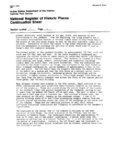
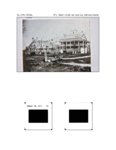
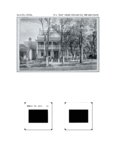
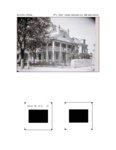
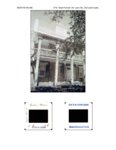
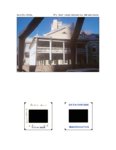
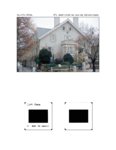
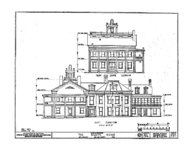
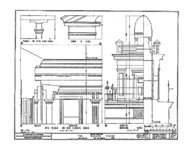
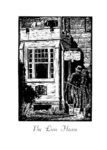
Show a.. ,..... NIl. , ,QH.O!I1' United States Department of the Interior National Park Service National Register of Historic Places Continuation Sheet Section number _7!.....-_ Page -..1...7 _ _ 139 feet. The facade is at the narrow end. The long gable roof is intersected by 10 higl :-pi tched, smaller gable dormers on each longi tudim:. '. side and pierced by four interior chimneys, two at each gable end. The foundation, which reaches a height of about 10 feet on the west elevation, is rusticated sandstone with a narrow, cut stone water table set diagonally from the foundation stone to the stuccoed adobe walls. The stuccoed adobe exterior walls are painted yellow, the wooden trim white, and the shutters green, all believed to be the historic colors. The architectural style of Lion House is predominantly Gothic but clearly adapted to its intended use. As he did in his design of the Beehive House, Angell mixed a variety of stylistic features he found appealing and useful and adapted them to the building material and building function. Thomas Ward contributed the most striking element of the facade which is the granite, Gothic-styled entry vestry with corner stone buttresses and crenelated balcony parapet atop which the stone lion couchant was placed the year the house was completed. The vestry projects about 5 feet out from the front wall and has a pine paneled door with Gothic carving on the eastward extension. A large, 12over-12 light window with sidelights and label molding is centered on the vestry. A fixed, rectangular, 18-1ight window is below the central window at foundation level, and a 6-over-6 light window with sidelights is above it. Two 12-over-12 light windows flank the vestry on the first story, two smaller 6-over-6 light windows flank it on the second story, and two small 6-over-6 light windows are at the attic level near the gable peak. Other windows are double-hung wood sash with label molding, shutters, and lug sills. On the longitudinal east and west elevations, the 10 gable dormers on each side symbolically marked 20 small second-story bedrooms for many of Young's wives and children. The partitions dividing the bedrooms were removed in 1901-1902. Multi-paned, Tudor-style, dormer casement windows with a quarrel pattern in the transoms and capped by Gothic hoodmolds are at the center of each of the 20 steeply-pitched gable dormers. Wood paneled and paned doors, some with transoms and all with the same label moldings as the windows, alternate with windows at the foundation level on the west elevation and on the main level of the east elevation. The windows on the east are shutterless; those on the west have shutters on the second level and are shutterless on the foundation level. The toilet addition on the rear of the house, built by Brigham Young during the period of national significance, has been replaced by an elevator and an iron fire escape. The exterior elevator housing was constructed in 1968 in a style harmonious with the original structure. It is a half-gable section with 12over-12 light double-hung windows capped by label molding and projecting approximately 6 feet from the main gable end on the north rear. , |