| OCR Text |
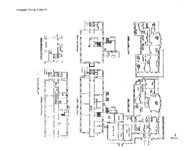
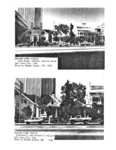
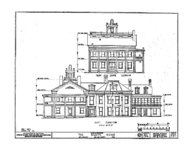
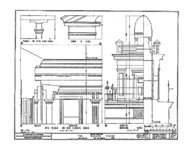
Show 'United States Department of the Interior National Park Service National Register of Historic Places Continuation Sheet Section number --=.8_ _ Page --=2=---_ In 1833 Joseph SJTlith drew a plat of the ideal "City of Zion," 1 mile square in which up to 20,OuO people could reside. Smith's plat was the basis for the physical layout of the City of the Great Salt Lake (officially named Salt Lake City in 1868) as the first "Mormon village" in Utah. Division of the city site into 10-acre square blocks with streets 8 rods (132 feet) wide began July 31, 1847. a week after the settlers entered the region. Blocks were divided into tracts called "inheritances" for each family, large enough for orchards and gardens. A few log houses were built in the new city, but the raw material for adobe was much more readily available and 110 "brethren" were chosen to make it. Young chose for himself two blocks adjoining City Creek and immediately east of the Temple Block. In the fall of 1848, he built a row of log houses for his wives and children. These houses collectively were called the Log Row. In 1849-1850, to the south of this, he built a white-plastered adobe house called the White House (or Mansion House) for his "senior wife" Mary Arm Angell and her five children. It was Colonial in design and served for a short time as the official headquarters for the Church and State government in the territory. These structures are no longe r standing. Construction of the Beehive House and Young's adjacent President's Office began in 1852. His Governor's Office for the administration of civic affairs was completed in 1854. In 1855 Beehive House became Young's official residence as Territorial Governor and Church President, and the home of Young's first plural wife Lucy Ann Decker who ultimately had seven children. Some other wives resided with Lucy for short periods to help with housekeeping and entertaining . The Lion House, to the west of the other buildings, was erected between 1855 and 1856. By the time the Lion House was completed as a private residence for his family, Young had 11 connubial wives and 35 surviving child~n, in addition to several non-connubial "caretaker wives" and foster children. From the time Young commissioned construction of his residences and the Governor and President's Offices in the present complex in 1852, until his death in 1877, the Mormon community under his leadership endured an era of intense turmoil and change. Young engineered many compromises with mainstream American society over these 2 1/2 decades. Yet Mormon culture retained a unique ideological and social identity still evident in contemporary Mormon society. Its identity and cohesion was manifest both in the physical layout and construction of Great Salt Lake City and the Brigham Young Complex. Despite Mormon progress in orderly community development, the United States Government did not allow it to proceed in isolation or tranquility. A series of military and economic crises that Brigham Young confronted during the time he resided in the complex caused alienation of the Federal Government and nonMormon population from the Mormon community. When Utah came under U.S. jurisdiction through the Treaty of Guadalupe-Hidalgo in 1848, the Mormons |