| OCR Text |
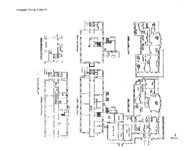
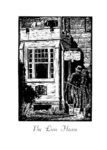
Show ·United States Department of the Interior National Park Service National Register of Historic 'Places Continuation Sheet Section number ....,;;8:-.--_ Page ....::,1=-2_ _ Thus the spatial arrangement of the buildings of the Brigham Young ~O!flex carefully delineated domestic, public, and church functions. ThL is '''evident both in its external configuration and in what is known of the use of internal spaces. Designed to achieve familial harmony and functidnal efficiency as the model household of a unique 19th century utopian community, and ~ntegraily associated with the life of Brigham Young and events in the settlement of the Intermountain West, the complex exhibits historic national significance. Endnotes 1John W. Reps, Cities of the American '~st: ~ History of Frontier Urban Planning (Princeton, New Jersey: Princeton University Press, 1979), 290, 306. - 2Jeffery O. Johnson, "Living--and Living with--the Principle: The Brigham Young Households," (unpublished manuscript, ca. 1984): Pau~ L. Anderson, "Brigham Young and the Lion House," (unpublished typescript of a talk given at the Lion House, ca. 1983). 3Leonard J . Arrington, Brigham Young: ' ,American Moses (New York: Alfred A. Knopf, 1985), 169-170; Paul Goeldner, Utah Catalog: Historic American ' Buildings Survey (Salt Lake City~ Utah: Utah Heritage Foundation, 1969), 3-6; WPA, Utah: A Guide to the State, American Guide Series (New York: Hastings House~41;-republ.-r972) ,58-00, 67-70. - , ,~ tM~ .~._ 4Leroy R. Hafen and Ann W. Hafen. eds .• The Utah Ex~itiOn' .!.§21-g858 .; (Glendale, California: The Arthur H. Clark Company, 1~; repu~. 19 2), 42, 310-313; Hubert Howe Bancroft, History of Utah 1540-1887 (San Francisco, California: The History Company, 1890), 506-507. 5Arrington, 294-299. 6quoted in Arrington, 352. 7Susa Young Gates Collection, typescript, Utah State Historical Society, Box 1, fd. 5. 8Arrington, 400-401. 9Thomas Carter, '" All Just the Same Toward the Street I: The Folk Architecture of Mormon Polygamy," (unpublished manuscript, ca. 1985). ,See also Paul Goeldner, "The Architecture of Equal Comforts: Polygamists i tT!t:Jtah" Historic Preservation, v. 1, no. 1 (1972) for an earlier, brief discussion of this architecture. |