| OCR Text |
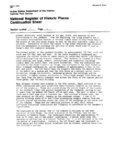
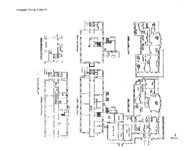
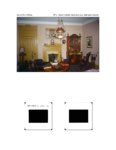
Show . . . ,.,... 1C14OO4 (NIl 'United States Department of the Interior National Park Service National Register of Historic Places Continuation Sheet Section number ---Os=---_ Page 10 One wife was appointed by Young to be in control of the "culinary department." She was considered the "stewardess," who kept the keys and was overseer of a hired cook, usually male, and three other servants. Two girls were hired to wash dishes and scrub, another to cook meats and vegetables, and deaf and dumb Sarah Ann Baker to do the pastry cooking. Dining was methodical and wellordered. In the 40-foot-long dining hall in the southwest corner of the basement, each wife had a regular seat with her children at the tables. Those with children were seated at the heads of the tables in the order they came into the family and had preference over those with no children. The first "plurality" wife, Lucy Decker, presided at one of the long tables, while Brigham Young always presided at the short table when he ate at Lion House, with Clara Decker and her children on his left, Emeline with hers on his right. "This order was strictly observed," wrote Susa Young Gates, and the preferences displayed caused "much unhappiness on the part of the wives less favored." From 50 to 70 diners could be accommodated at the evening meal here. There were several storage cellars in the basement that were used for the milk, butter, and vegetables brought daily from the Young farm 4 miles away, along with fruit and other produce from the grounds of the housing complex. Another cellar room was used for weaving and as a gathering place where all the mothers and grown daughters shelled peas, pickled peaches, and sorted strawberries. Next to the dining room was an ample cupboard and pantry, and northward from the pantry a "large and roomy" kitchen with large cupboards and a large tinlined sink with a wastepipe through the outer wall to carry off dishwater. This was one of many examples of Young's pragmatic attention to detail and "solicitude over his wives and their comfort." A connecting door led from the basement pantry to the flagstone washroom, which led out of the kitchen. Young devised a clothes barrel with a large wooden mallet where the women with the help of a hired man could pound out the dirt. A large cookstove was installed atop the flagstone floor so that cooking grease could be "hygienically" cleaned. Two "immense" boilers stood beside a "great open fireplace" and a "huge" chimney led up through every story of the house. In addition to the storage and preparation of foodstuffs, dining, weaving, and washing, the basement level had a long narrow schoolroom, also used for dancing, the same size as the dining room (about 15 by 40 feet). This was used until Young had a separate schoolhouse built on the grounds in 1862 for his children. (See drawing of ground-floor plan, circa 1868, by Susa Young Gates.) On the main story of Lion House there was a parlor (32 by 16 feet) at the front southwest end, expensively furnished with mahagony tables. This is the one room in the house that retains much of its historic appearance. There the family met every morning and evening when Young rang the bell for family |