| OCR Text |
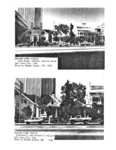
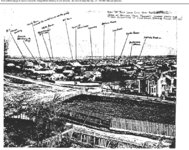
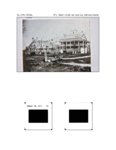
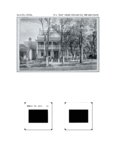
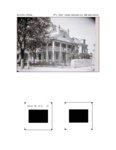
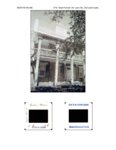
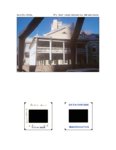
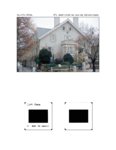
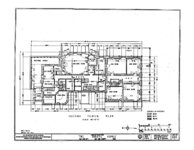
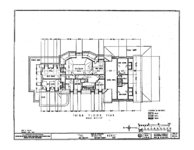
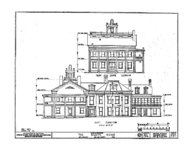
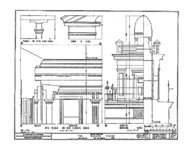
Show United States Department of the Interior National Park Service National Register of Historic Places Continuation Sheet Section number ---,7_ _ Page -=-5_ _ are in the rear of the building and, because they remain consistent with the original architectural character, do not dramatica21y alter its integrity. Currently the offices in the complex are used for administration of the Lion House Social Center and for Beehive House tours. Beehive House The Beehive House, begun in 1853 and completed in 1855, served as Young's official residence and was the third building completed in the Brigham Young Complex. It is a 2-story, double-pile, Georgian type house with Greek Revival and other classical elements. The gable roof is pierced by paired chimneys on the east and west ends. The bracketed porch cornice, the ornamental roof deck balustrade, and the cupola topped with the symbolic carved beehive perhaps were borrowed from the Italianate style. The roof deck ironically suggests the "widow's walk" from New England seacoast architecture. Similar roof decks were present in several early Salt Lake City buildings, however, and were called "observatories." They perhaps were meant to serve a defensive purpose as actual lookout points in the frontier community. When first constructed, the Beehive House was a 2 1/2-story structure with a 8 center-passage, double-pile plan reminiscent of larger New England farmhouses. The main portion of the building measured approximately 45 feet by 35 feet and had the facade located on the south longitudinal elevation. As it appeared in an 1855 photograph, the Beehive House had a 1-story perpendicular wing extending from the rear for a men's dining room, kitchen, and storage area (see photograph, circa 1878. taken from the north toward the rear of the Brigham Young property). Originally. a simple 1-story colonnade with a second-story balustraded balcony extended across the facade and around the east side. By the 1870s, photographs show that the existing elaborate 2-tiered porch was added. The balcony is supported by 2-story, square, fluted wooden columns evenly spaced. The columns give the appearance of a composite order due to the ornate bracketing which blends into the porch roof entablature. The more elaborate porch probably was added about 1869 and gives the house a more stately appearance as Brigham Young's official governor's mansion. Upon his death, Young deeded the house to Lucy Decker who in turn sold it to one of Young's sons, John W. Young. In 1899 the LOS Church purchased it for offices and the president's residence. It was used in this cap~city until 1918 when it was converted to use as a home for single Mormon women. In an extensive remodeling by John Young in 1888-1891, the north wing was demolished and a more elaborate 2-story rear addition constructed with dimensions of approximately 45 feet by 71 feet. The addition reflected late 19th century Victorian architectural styling and has a mansard-like, hipped and clipped gable roof with dormers. At the time of the remodeling the main entrance was moved from the south to the east side in the addition. |