| OCR Text |
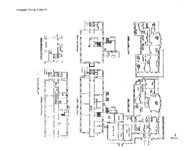
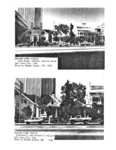
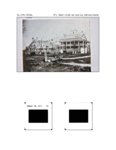
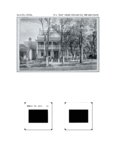
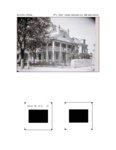
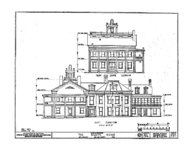
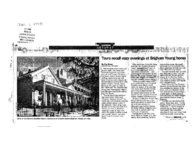
Show United States Department of the Interior National Park Service National Register of Historic Places Continuation Sheet Section number --,-7_ _ Page -",8_ _ The 1967-1968 rehabilitation of the Lion House exterior was based on historic photographs and description and has returned the structure as nearly as possible to its original appearance. Exceptions are the elevator addition to the north end of the building and the absence of the sleeping porch, exercise gym, and a frame structure built in 1861 that extended the length of the west elevation of the house, probably removed in 1878, the year after Young's death. Removal of the original stucco finish took place before 1915, and a simulated stone veneer was later added to the adobe. This veneer was removed during restoration. Resurfacing of the adobe brick and sandstone structure was done, according to the description of Young's daughter Clarissa Spencer Young, as "cream plaster, which with the white woodwork and green shutters made a very lovely appearance." After Young's death in 1877 disposition of the house brought radical alterations of the interior. According to references in the LDS Church Archives, five or six of Young's widows remained in Lion House until 1900 when the Brigham Young Trust sold the President's Office and Lion House to the Church. The office building was used, as it was historically, to conduct the "business of the presidency, Bishop's Office and historian's office" and to "consolidate all Church business." In 1901 and 1902 the Lion House was converted to the home economics and other departments of the new Latter-day Saints University. At that time the interior was radically altered, especially on the second story where all the bedroom cubicles were demolished to create large rooms. After the building was no longer used as a school, it again was remodeled in the late 1960s to serve as the Lion House Social Center, which is still its function. Most of the building is used for dining, meetings, and social gatherings. During the period of national significance the basement level, completely above ground on the west elevation, contained a number of doors and large windows so that it was brighter and airier than a typical basement. It was the core of Young family activity. All food preparation, and dining that included as many as 70 people at a sitting, took place on this level. In addition to a long dining room, cooking and food storage areas, there also was a schoolroom and a room where the female members of the household did weaving. The basement has been remodeled into a cafeteria and dining area for large groups and social center members. The large open fireplace at the north end is probably not from the period of national significance (see sketch of the Lion House ground floor circa 1868 by Susa Young Gates). The first story was divided into nine larger bedrooms with sitting rooms and a large parlor at the southwest corner for family prayer meetings and entertaining. After the 1967-1968 remodeling, the first floor bedrooms and parlors were converted into parlors, dining, and service rooms along each side of the long central hall with a staircase at each end. An elevator was placed |