| OCR Text |
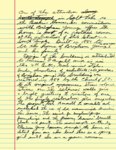
Show United States Department of the Interior National Park Service National Register of Historic Places Continuation Sheet Section number _8_ _ Page _9::....-_ efforts were the toilets on the north end of the house, one on each floor, set off Dn the two main floors by long wooden galleries. The toilets, now replaced by an elevator addition, were flagstone cemented for protection to the foundation floor. All liquid was drained from a stone rivulet into limed receptacles. Every morning the stone floors were cleaned and lime thrown upon them. The doors were fitted inside with wooden clasps for privacy; yet they prevented small children from locking themselves inside. Susa Young Gates, Young's first child born at the Lion House, recalled: Brigham Young . . . knew the dangers bred by careless sanitation, and the stone-floored vaults which led, by long passage ways from the north end of the Lion House, were covered with lime daily. The kitchen slops were thrown into barrels and carted away daily, to be fed to pigs, if nutritious, or burned, if useless. The rags which escaped the carpet rag bag were religiously saved for the papermill as well as all scraps of paper. The wash house was s tone- flagged, and the washing suds were carted away for the sun to dry up in exposed corners . . . . The same sanitary precautions obtained in all the surrounding barns and corrals. The barn was paved as well as constructed of cobbles; the horse barn was also cobble-paved. And the corral was cleaned and all its richness utilized in gardens and fields. There was no waste, no want. And there is therefore no marvel in the fact that there were almost no epidemics of childish diseases, no scourges, no fevers. Nothing but the egular return of light measles and a rare attack of scarlet fever. 15 In his focus on cleanliness, order, and the relationship between these attributes and the moral education of his children, Young was in the mainstream of American architectural theory. This was a predominant thrust of the era, not only in utopian communities, but for many American intellectuals who sought a replacement for the religious and moral instruction provided in the traditional community. Some historif@s term this movement a new "cult of domesticity" and "domestic economy." The Young family's adherence to these domestic tenets was best reflected in the tasks accomplished at the basement level of Lion House. On the west elevation, and partly on the remaining elevations, the basement was built above ground with a number of windows and entrances. Thus work in there was carried on in an airy and bright atmosphere. Food preparation and storage was a continual focus in the Young household, as it was in the larger community under Young's public administration, and the basement was the center of this activity . |