| OCR Text |
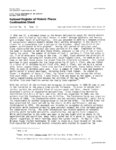
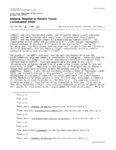
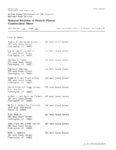
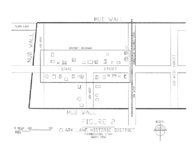
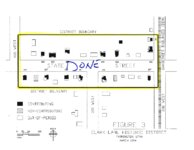
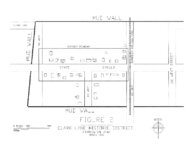
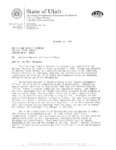
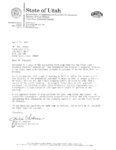
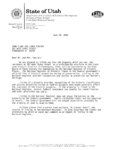
Show tate ah Department of Community & Economic Development Division of State History Utah State Historical Society Michael O. Leavitt Governor MaxJ.Evans Director 300 Rio Grande Salt Lake City, Utah 84101-1182 (801) 533-3500 FAX: (801) 533-3503 June 2, 1994 1'" RE: National Register of Historic Places Dear 2"': As you are probably aware, the Clark Lane Historic District in Farmington is being considered for nomination to the National Register of Historic Places at the request of the neighborhood group. Though your property at 3'" does not contribute to the historical significance the district, it is within the boundaries and we are therefore obliged to notify you of the proposed designation. The Board of State History will review the historic district nomination at its meeting in July. The National Register of Historic Places is the federal government's official list of historic properties worthy of preservation. Listing in the National Register provides recognition, assists in preserving our Nation's heritage, and assures protective review of federal projects that might adversely affect the character of the historic district. Contrary to popular belief, there are no restrictions that come with National Register listing. Public visitation rights are not required of owners. The federal and state governments will not attach restrictive covenants to the property or seek to acquire them. Property owners retain all of their rights to alter, demolish, or preserve their buildings as they see fit. Developers are not prohibited by National Regisetr designation either. The only restrictions and controls in a historic district are those imposed by the city as the result of City Register designation (not National Register). If you have concerns about local restrictions (to our knowledge there are none), you may wish to contact Max Forbush, the Farmington City Manager, at 451-2383. One of the primary benefits of National Register designation is simply the increase in neighborhood pride. It tends to help stablilize a neighborhood, stimulate increased owner-occupancy by making it a more distinct and desirable place to live, and generate increased property values as buildings are rehabilitated. These beneficial effects vary, of course, depending on the area and the economy at the time. Overall, however, historic district designation has produced positive results both in Utah and throughout the country. At the end of this letter please find a notice that explains, in greater detail, the results of listing in the National Register. It also describes the rights and procedures by which an owner may comment on or object to listing in the National Register. . Board of State History: Marilyn C. Barker • Da le L. Berge • Boyd A. Blackner • Peter L. Goss DavId D. Hansen • Carol C. Madsen • Dean L. May • Christie Needham • Thomas E. Sawyer • Penny Sampinos • J erry Wylie |