| OCR Text |
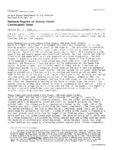
Show CHAPTER IX 1 THE UNITED ORDER As Bishop John W. Hess had predicted five years earlier, the cooperative program would become a stepping stone to something bigger. It led to a revival of the United Order, which the Mormons had lived for short periods in Missouri and Ohio. introduced by Brigham Young in 1874. or had ceased operation. The second United Order was Many cooperatives were failing In addition, the national depression of the 1870's was adversely affecting Utah's economy. Gentiles moving into. the territory were threatening the economic unity of the Mormon empire and undermining home industry which Brigham Young emphasized heavily. The Order was thus introduced to strengthen Mormon economic unity and foster home industry; as Bishop Hess expressed it, the United Order was "to keep the money in the country and make us self_sustainingo,,2 The various branches of the United Order organized by Brigham Young in 1874 took several forms. A few were all_inclusive communal arrangements, like that in Orderville, where the entire economy was cooperatively owned and operated and even the food was cooked in a l For discussions on the United Order. see Arrington, Great Basin Kingdom, chaps. vi-xiii. and UHQ, XXXIII. 208-217; Arrington and Ralph W. Hansen, "Mormon Economic Organization: a Sheaf of Illustrative Documents," UHQ, XXVIII (Jano, 1960), 41_55: Neff, chaps. xvi, xxviii: and Stenhouse;-:-chap. xxxvii. 2Teachers Minutes, Nov. 22, 1874. |