| OCR Text |
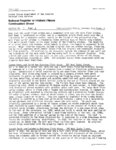
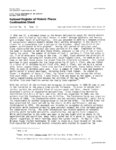
Show Thomas G rover settled near Steed Creek and later built a two-story adobe house on the iiortheast corner of our church grounds. It was called "Grover Inn." Samuel Gregory bought this property and later the house was torn down and the ground was used for the church parking lot. .' William O. Smith (father of Lot Smith) settled north of Lagoon in 1848. He died July 7, 1849, and was buried on his own property. Others of the Smith family were buried there and their graves are still located in the center of the old race track at Lagoon. Daniel C. Davis settled in South Farmington in 1848 and built a tworoom log cabin. Part of it is still standing on the Walter Elliot property and is part of the home of Trudy Elliott and husband, Michael Nelson, at 945 S. 2nd E. Daniel Davis was Captain of E. Company in the Mormon Battalion. Davis County was named in his honor, as was the Davis Creek that came from Steed Canyon and down the east and south end of Farmington. When the early pioneers arrived they tried to settle near the mountains along the streams. The culinary water supply was plentiful and was pure and soft as it came from the many springs. The mountains helped keep the soil warm, making it one of the best and safest places for orchards (cherries, apricots and apples) and for raising garden and farm crops. The first winter was very severe and cold with much heavy snow. It was frozen so hard they traveled on top of the crusted surface. It was a difficult winter for the cattle also. The pioneers had to cut cottonwood limbs and let the stock eat the bark from these limbs, as there was no hay. Allan Burke, a son-in-law of William O. Smith, located near a spring in 1848, north of Burke Lane and west of Highway 106. The lane was named for him. In 1849 North Cottonwood Ward was organized. The settlement was later strengthened by the arrival of John W. Hess, Ezra T. Clark, Thomas Sasson Smith, John S. Gleason, Gideon Brownell, Joseph Lee Robinson, Joseph Secrist, Willard Richards, William Kelsy Rice and others. Jacob Moroni Secrist was born in Salt Lake City on August 15, 1850, and came to Farmington shortly after his birth with his parents, Jacob Foutz Secrist and Eliza Logan Secrist. Jacob's farm was in the far end of North Farmington and he was also in the dairy business. He was ordained Bishop of the Farmington Ward on July 2, 1882; was nominated Davis County Commissioner in 1890; was president of the Farmington Commercial Manufacturing Company, and was a Director of the Davis County Bank. Rastus R. Rudd settled in a small cabin on the banks of the stream from which we receive our drinking water. It has always been called Rudd Creek. Rastus Rudd was a relative of the Frederick Coombs family who settled just south of the rock chapel. Some members of the Handcart Company living in Farmington were Sarah Steed Harrod, James Loynd and Elizabeth and Emma Walker. Although the Walker girls were not related, they both came from England. They both married Thomas Grover. Besides these families, there was a small band of Utah Indians at the mouth of North Cottonwood Canyon (now Farmington Canyon). People settled here because of the many opportunities for livelihood and because they had invitations from friends and relatives. The early settlers first called the town "North Cottonwood" after two tall cottonwood 4 trees that stood on Ezra T. Clark 's 'farm about 35 rods west of the Shortline Depot. They could be seen for many miles and stood like a sentinal. You could see them from the point of the mountain as you left Salt Lake City to travel north. In 1853 when the population totalled 413 the name of our town was changed to "Farmington" because of the rich farmland and also due to the fact that Wilford Woodruff had come from a town in Con· necticut with the name of Farmington. Cottonwood Creek is now called "Big Creek." and North Cottonwood Canyon is now "Farmington Canyon." Lucy Grover was the first white child born in Farmington. She was the daughter of Thomas and Laduska Grover and was born January 7. 1849. She later married David Sanders. Joseph E. Robinson was the first white male child born here. He was the son of Joseph Lee Robinson (the first Bishop) and Maria Wood Robinson. and was born February 2, 1849. When he was quite young, he was driving a team of horses when the reins fell and he was injured as he climbed down on the tongue of the wagon to retrieve them, and fell. His injury left him crippled for the rest of his life, but did not hinder his service to his town. He was lovingly known as "Uncle Jody" and was choir leader for many years. In 1850, before there were any roads, the pioneers hauled Ibgs from Weber Canyon to build a schoolhouse. Harvey Green was the first teacher. The first adobe schoolhouse was built in 1855 just west of George Hess'; now Elwood and Mary Clark's home at 4th North and Main. Grain was harvested and cut with a cradle and sickle. We have one in our log Penrose cabin with many other treasured relics. Threshing was done by use of the flail and by tramping it out by oxen and horses. The chaff was removed by a fanning mill run by hand. In 1855 the town was plagued with grasshoppers and drouth. Again in early May 1868 the community all turned out with spades, shovels and drags, and killed millions of grasshoppers. The insects were numbed with the cold and piled three or four inches thick under plants and weeds. Men. women and children worked three days burning them with straw and driving them into ditches of water to drown. Arthur Stayner said, "We do not know whether we can kill all that come, but we most assuredly intend to try so we can save our crops. " As more families came, they lived in rather scattered places in log houses with one or two rooms and mostly dirt roofs with willows. Furniture was, in general, a makeshift out of such as dry goods boxes. Stoves were very scarce. I remember my father (John W. Steed) telling us he bought a secondhand stove for mother (Ann Jenkins Steed) at a cost of $75.00. Dishes and cooking utensils were not plentiful, as all they had were those they had brought with them from England, Wales or from wherever they came. They wove their own cloth and made curtains, and used willows for brooms. In later years Evan Jenkins and others raised broom straws and ;nade brooms and braided straw hats. Soap was made in nearly all early settlers' homes, and they made their own matches. Coal was hauled from Coalville and it took five days to make the trip . As soon as roads were made, the men hauled logs from the canyons for building pole fences, bridges, dams 'and various buildings. The first main road traveled was along the lake shores. 5 |