| OCR Text |
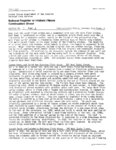
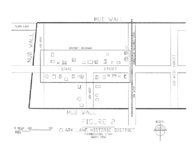
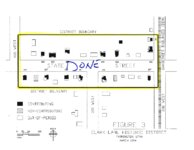
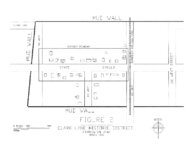
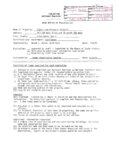
Show OMB No. l002HlOll1 NPS Form HHIOO·. Utah WOfoPerfectb. l Format (R.vised Feb. 1993) United States Department of the Interior National Park Service National Register of Historic Places Continuation Sheet Section No. ~ Page ~ Clark Lane Historic Di strict, Farmington. Davis County. UT Under the family organization patterned after the United Order, homes were built for five of Clarkls children, three from the first and two from the second wife respectively. Although developed communally, the homes display a rich variety of architectural planning and styles. Analysis of the development pattern of the district reveals that the majority of the second generation homes were built on the side of the street on which their mother originally resided. However, this was a tendency only since examples of crossover occurred. This also illustrates the compatibility of the two separate polygamous families, for they continued to live near each other. Not all of Clarkls children had the same success in their plural marriage families, due in part to the challenges of the lifestyle and the persecution that was dealt to polygamous men and their families by the federal government during the 1880 s. Ezra Clark was unable to avoid prosecution and was subsequently convicted of illegal cohabitation in 1887. He subsequently served a prison term in the Utah State prison. In order to spare her husband, Joseph Marion Tanner from prosecution, Annie Clark Tanner, a daughter, was forced to live on the lIunderground railroad a system which assisted in concealing the identity of polygamous families. Such occurrences were a great disappointment to the Clark family since many either were born into or married into a polygamous family. Fortunately, persecution waned with the release of the Manifesto in 1890, allowing the Clarks and other polygamous families to live without fear of prosecution 19 • Following the challenges of the 1870 l s and 80's, the final decade of the nineteenth century was a period of growth and prosperity for Farmington and its residents. Ezra T. Clark and his family were active participants in this process. The construction of a majority of the districtls eligible structures coincide with this period. In June of 1891 Simon Bamberger, a Salt Lake City businessman, announced his intentions to build a railway which would link Salt Lake City and Ogden, stating at one time III will ~uild and equip the best and most modern electrical road that science can produce 0. By 189 the Bamberger line was completed to Farmington and was served by steam locomotive 2 . This rail line was located on 200 West Street which forms the east boundary of the district. In conjunction with his railroad, Bamberger developed an amusement park known as Lake Park which was situated on the shores of the Great Salt Lake. In 1896 the park was relocated to Farmington to the present site of Lagoon Amusement Park, which adjoins the district on its north boundary. Bamberger was able to assure patronage of the park by providing fast and inexpensive transportation from Salt Lake City and eventually from Ogden. The railroad had no small effect on the progress of Farmington and during the 1890 l s the city began to prosper. During that decade a new County Courthouse was completed 1 ll II , 1 19janner, Annie Clark. A Mormon Mother (Salt Lake City: Univ. of Utah, 1983) pp. 70-132. ~hite, John S., Farmington. The Rose City(Kaysville, Utah: Reflex Print, 1913) p.31. 21Hess, Margaret Steed, My Farmington (Salt Lake City: Moench Letter Service, 1976) p. 49. .£. See continuation IMeI |