| OCR Text |
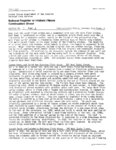
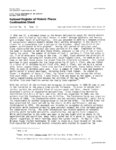
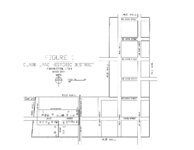
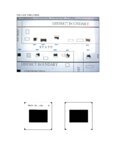
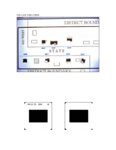
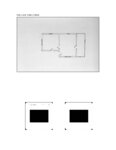
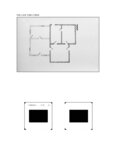
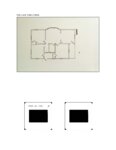
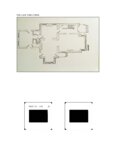
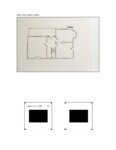
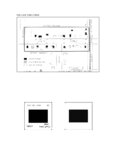
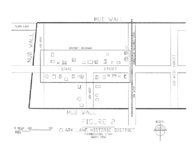
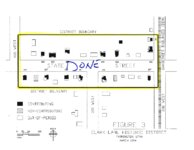
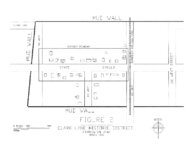
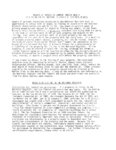
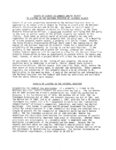
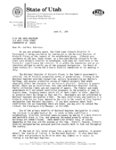
Show ~~ OMB No. lQ024-1lO16 FOI m 10 ·yu(} " tJ1 8h W OfO f.J t> t1ftoCl :' 1 f.or mAl IHe "'I~.d ":e b , 1993) \Jnited St a tes Ocpartrrcnt of the Interior National Park Service National Register of Historic Places Continuation Sheet Sec t ion No. __8__ Page ~ Cl ark Lane Hi s torI c DI str i c t, r armI ng t on, Davis County, Ul The va st majority of these earl y settlers were members of the Church of Jesus-Christ of Lat te r-day Sa ints, whose leaders discouraged t his haph azard pattern of settlement which wa s considered "Gentil e" in fashion. As stated by Leonard: In part to counteract this trend, a town plot was surveyed in the fall of 1853. Surveyor s located the village on a foothi 11 bench wide enough from east to west for only two city blocks. They ran the main street parallel with the mountains. Six lots, each containing 150 square rods of land, were measured off in every block, and the blocks were separated by streets six rods (ninetynine feet) wide. At the time of this survey only three adobe and four log houses had been constructed within the town plot. To encourage further settlement in the town rather than upon nearby farmlands, local leaders planned a city fort. Indian troubles in central and southern Utah in 1853 had led Brigham Young to proclaim a general policy requesting all Mormo~ communities to wall themselves in as a protective measure. The site for the fort was selected sometime prior to September, 1853, perhaps in conjunction with the town survey. After beginning construction with stone, it was concluded that the fort be enclosed instead by a mud wall. As originally planned, the mud wall was to be ten feet high, four feet thick at the bottom, and two and a half feet thick at the top. It was to enclose a city plot two blocks east and west by about six blocks north and south. These original plans were altered to include three and a half blocks on the weste~n extension of the bench, creating an "L" shaped enclosure (see figures 1 & 2). Within this western extension of the fort, Ezra T. and Mary S. Clark had already begun laying the foundation for the settlement of their family. It is likely that this western extension of the fort was encouraged by Clark. Regardless of his view on the issue , he was no doubt intimately involved in the process to extend the fort since his home was impacted by its location. It is also important to note that the fort walls of this western extension were located to take advantage of the terrain which created a defensible site whereby views to the surrounding countryside were unobstructed by the walls. The fort walls were never completed as originally conceived, reaching only a height of six feet by about 1855. The seven planned entrances were left open, never having had their gates hung. By the end of the 1860's, residents began leveling out the dirt humps in their lots and the wall eventually disappeared from existence except in a few scattered fragments lO • No portion of the wall remains at the present time. \eonard, Glen M. Masters Thesis, A History of Farmington. Utah To 1890. Univ. of Utah, 1966, p. 86. 9 Ibid • p. 87. l°lbid. p. 87. ~ See continuation sheel |