| OCR Text |
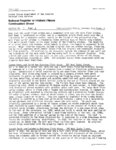
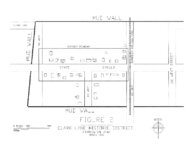
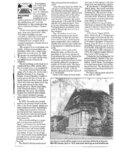
Show lte:, so he built his father a BIshop Moroni Secrist and !~ton of our town for many rIghteous man and many of ~ power he had been blessed sed some land and built the house. There was one large for storage. In front of the !, that covered the sidewalk )f where boys loved to play. he gave them, but the older ley would take ropes and tie sts. He would try to get out ould fall off and out would of you, and don't you come nan. England, and was a son of e of a ~amily of 14 children. I Farm:ngton and they were ess. Elizabeth was a delightovely family. Many of their ras a very industrious little rta~, ~nning his little store. ~onm s store and went back ~ partners and acquired the )f Fa rmington Rock Chapel. About 1878 he owned and operated a small molasses mill. He had a water wheel that ground the sugar cane and made molasses for people of his Ward. Everyone would take a little bucket and get molasses. He also had an interest in a grist mill and would buy wheat and have it ground so he could sell the flour and bran. He was in the mercantile business many years and served the people well. He was very accommodating. Folks in the town dried much fruit and Mr. Coombs shipped the dried fruit in 100-pound lots to outside locations. Dow Chaffin, a neighbor who lived where Clarence Ward lives now, did all the hauling of supplies from Salt Lake for Fred's store. There was only one telephone in our town for a long time, and it was in Fred Coombs ' store. Someone was in the store once when Fred called Dow Chaffin and told him to "bring three 'ams off the same 'og. " He was a typical Englishman. He won the love of the children in the Ward, as he always handed out candy or threw a scoop of peanuts out for them. They all called him " Uncle Fred. " Fred had two boys by a former wife and six by Elizabeth. He made a living by operating his store for 47 years. He retired when he was no longer His store was purchased by Fred able to work and died at the age of 86. Oviatt. F.C.& M. Co. The Farmington Commercial a nd Manufacturing Company was incorporated March 30,1891, with Ezra T. Clark as president; succeeded by Joseph Secrist in 1901 and J o·seph E. Robinson in 1906. They sold shares of stock for $5 .00 each and the store opened for business in December of the same year, on the northeast corner of the intersection of State and Main streets. In 1910 the building was enlarged substantially to 100 by 76 feet, with steam heat throughout. The building is now occupied by the County Office of the Utah State Extension Service. James H. Robinson was the manager of the F.C. & M. Co., which was the largest in the town; two stories high. They sold lumber, coal, cement, nails, tools, and all kinds of hardware on the main floor, and upstairs they sold shoes that were purchased from Z.C.M.1. There was a lovely basement with natural cold water from a spring. The spring supplied water for the Academy School and the Shortline Depot. 1892 photo of Farmington Commercial and Manu facturing Co. L. to R. are: J . Henry Robinson, Cla ri sa M. Stay ner, Edi t h Walsh, Ha rold Robinson. Mark Burnet t. Jimmy Brown (a nd t wo children). George Hess. James Stevenso n a nd Ed ward S teed . 306 |