| OCR Text |
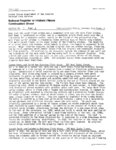
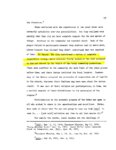
Show OMS No. NPS Form 10-900-a Utah WordPerfect 5.1 Format (Revised Feb. 1993) 10024-0018 United States Department of the Interior National Park Service National Register of Historic Places Continuation Sheet Section No. ~ Page ~ Clark Lane Historic District, Farmington, Davis County, UT is likely that this "citizens committee" was comprised of the owners and stockholders of the floral company, the benefits of such activities were felt throughout the community and district as well. During the next three years the economy underwent an expansion which affected nearly every business in town. The Mill~r Floral Company grew to contain 150,000 square feet of enclosed greenhouse by 1913 4. In 1910 The Farmington Commercial and Manufacturing Company expanded its retail space by 7,600 square feet and was transformed into a modern department store 35 • Following this example were several other businesses who 37expanded during 1910 ~fd 11 including L.H. Ovi~~t &Company 36, R~wpton Drug Store , Wood General Store , and the VanFleet Hotel . In May of 1910 the old steam locomotives on the Bamberger Railroad were replaced by electric cars. In 1911, a new public school building (Hilltop School) was completed, as well as a horse racetrack at Lagoon. Under these prosperous circumstances , a group of Farmington merchants joined to create the Farmington Commercial Club which functioned from 1912 to 4;920 41 , with Robert Miller (owner of Miller Floral) fittingly named as president . All previously mentioned businesses were repres{fted in the club including Simon Bamberger, owner of the railroad and resort . A number of Clarkts sons who lived in the district were instrumental in the success of the Farmington Commercial Club, including Edward B. Clark who served as Vice President, and Amasa L. Clark who served as treasurer of the club as well as mayor of Farmington. Another son, Joseph S. Clark, was listed as a resident member of the club in 1913 while serving concurrently as president of the Davis County Bank44. This period of development had no small effect on the district and the community, both socially and economically, which was expressed in part through its architecture. While no significant structures were built within the district during this period, a number of existing homes were updated by the use of bungalow-style porches and other 34Gould, Robert F. Ezra Thompson Clark's Ancestors and Descendants. 35 (Bethesda Maryland, 1975). p. 32. Ib id. p. 37. 36Ibid. p. 41. 37 Ibi d. p. 39. 3Blbid. p. 43. 39 Ba lle , Wayne L. National Reaister Nomination, Vanfleet Hotel, Farmington, Utah, 1991. 4oHess, Margaret Steed, My Farmington (Salt Lake City: Moench Letter Service, 1976) p. 383. 41Ibid. p. 401. 42White, John S., Farmington, The Rose City (Kaysville, Utah: Reflex Print, 1913) p. 49. 43 Ibid. p. 50. 44white p. 25,50. L See continuation sheet |