| OCR Text |
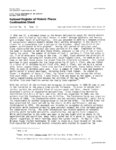
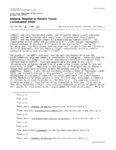
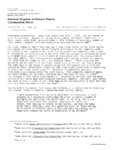
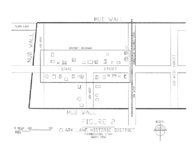
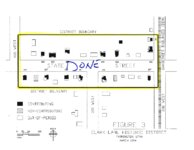
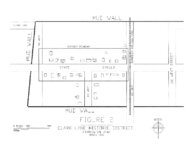
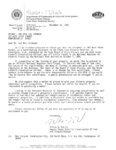
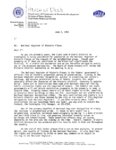
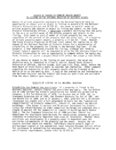
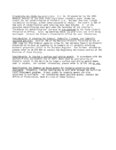
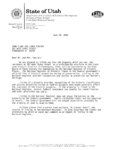
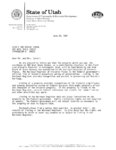
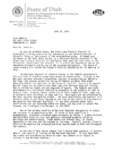
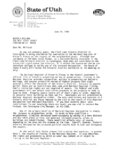
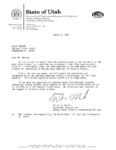
Show . r". '--a . . .... . :jtat(~ 0 :1 i lJ tctl' Depa rtment of Community & Economic Developm ent Divi sion of Sta t e Histo ry Ut a h Sta t e Hi stori cal Society Mic h ae l O . Leav itt Gon:rn or Ma x J. Evan s Director 300 Rio Grande Sa lt Lake City, Utah 84 101· 11 82 (801) 533·3500 FAX : (80 1) 533·3503 November 21, 1994 EDWINA M MANNING 255 WEST STATE STREET FARMINGTON UT 84025 RE: National Register of Historic Places Dear Ms. Manning: The Clark Lane Historic District in Farmington was nominated to the National Register of Historic Places on October 7, 1994 . Though your property at 255 West State Street, as a non-contributing structure in the Clark Lane Historic District in Farmington, Utah does not contribute to the historical significance the district, it is within the boundaries and we are therefore obliged to notify you of the designation. The National Register of Historic Places is the federal government's official list of historic properties worthy of preservation. Contrary to popular belief, there are no restrictions that come with National Register listing. Public visitation rights are not required of owners. The federal and state governments will not attach restrictive covenants to the property or seek to acquire them. Property owners retain all of their rights to alter, demolish, or preserve their buildings as they see fit. Developers are not prohibited by National Regisetr designation either. The only restrictions and controls in a historic district are those imposed by the city as the result of City Register designation (not National Register). If you have concerns about local restrictions (to our knowledge there are none), you may wish to contact Ma x Forbush, the Farmington City Manager, at 451-2383. One of the primary benefits of National Register designation is simply the increase in neighborhood pride. It tends to help stablilize a neighborhood, stimulate increased owner-occupancy by making it a more distinct and desirable place to live, and generate increased property values as buildings are rehabilitated. These beneficial effects vary, of course, depending on the area and the economy at the time. Overall, however, historic district designation has produced positive results both in Utah and throughout the country. D.L \ to I) H . tll ~l·ll H" :l rd o f :--:l. llt' !il :- I!),-\' : ~l ; II ' dy n ( ' , Ibrk t.· r • I blt , 1. Il"I"g'(' • H" \'d .4. HI :H"klll'l" • • \ ',11"1,1 1..' , ~1. l d:-(· 1l ~ I kan L ~I. t ~ • ( ' 1\1'1 :-. 1 It,' ~\'l·dh.J:1I • Tlh'llI,l :- !.: Sa\\ ,\"'" • PI ' l l'I" PI. 'IlIl), I. t;'I "'~. S~II1lP llh):; • Je rry \V,,, ht- |