| OCR Text |
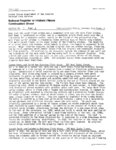
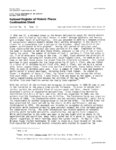
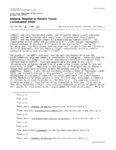
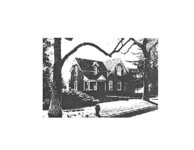
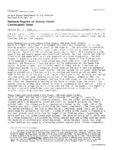
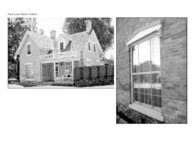
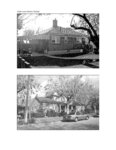
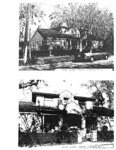
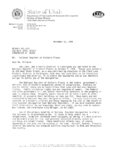
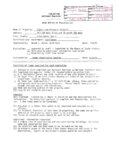
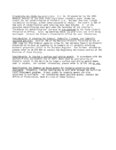
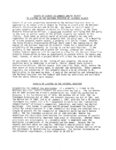
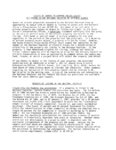
Show OMS No_ tOO2HlOt8 NPS Form t :l-9QO.a Utah Wo rd Pertect 5. t Format (Revised Feb. (993) United States Department of the Interior National Park Service National Register of Historic Places Continuation Sheet Section No. ~ Page ~ Clark Lane Historic Di strict, Farmington, Davis County, UT In 1856 and 57, a movement known as the Mormon Reformation swept the church wherein members were invited to "put their houses in order" through obedience and thereby gain a higher level of spirituality. This was preceded in 1855 by a renewed program of consecration wherein members deeded their worldly belongings to the church in return for a stewardship over a portion of the kingdom. About one-third of the members participated in this program l1 . During this period of religious zeal, Clark constructed the original two story portion of his home. Completed in 1856, the home is located at 368 West State Street, adjacent to the site of the original family log cabin. The number of children of Ezra T. and Mary S. Clark had grown to six, five of whom were living at the time. In 186i, Clark entered the principle of plural marriage , marrying his second wife, Susan Leggett Clark, for whom he built a home at 335 West State across the street from his principle residence. This second marriage in part accounts for the large posterity of Ezra T. Clark, who was father to a total of 11 children by his first wife , Mary S. Clark, and ten by his second wife, Susan Leggett Clark. Clark also married a third wife, Nancy Aureta Porter in 1870, to whom no children were born. Also, a number of Clark ' s sons and daughters participated in plural marriages, including Annie Clark Tanner. As stated by Tanner, a daughter of Susan L. Clark, "my father's wives lived across the street from each other. As a child, I went freely from one house to the otrer. A cordial family companionship existed between the children of the two homes"l. Also, children from both families worked the family farm together l3 . With the arrival of the railroad and telegraph to Farmington in 1869-70 came an end to the isolation of the people from outside influence. In order to defend their society against the predicted flood of eastern goods and ideas, church leaders developed a policy of cooperative mercantilism. Zions Cooperative Mercantile Institution (Z.C.M.I.) of Salt Lake City, which was organized in 1868, was the pattern that the Farmington Co-op was to follow. The Farmington Co-op was organized in March of 1869. The cooperative effort was not entirely successful, which led to its replacement by another program known as the United Order. The United Order had been practiced for short periods by the church in Ohio and Missouri, and was reintroduced in 1874. The movement was intended to re-emphasize certain religious principles which centered primarily upon personal conduct but also included guides for cooperative living. The order encompassed two related spheres of economic activity which included mercantile, manufacturing, and agricultural companies. While participation in the order was open to any who might wish to share in its opportunities and sacrifices, many likely joined out of a sense of loyalty to the church, regardless of their feelings about the system itself. On May 13, 1874, Brigham Young visited Farmington in order to organize a local branch of the order. Five executive officers and several directors were elected to supervise the 11Ibid. p. 54. 12Tanner, Annie Clark. A Mormon Mother (Salt Lake City: Univ. of Utah, 1983) p. 2. 13History of Edward Barrett Clark, Unpublished family history, copy in possession of p. 13. ..is.. See continuation sheet |