| OCR Text |
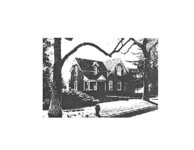
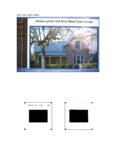
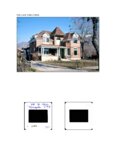
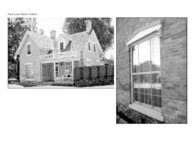
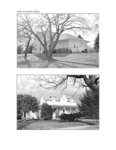
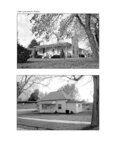
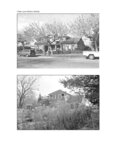
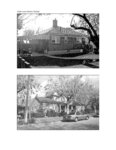
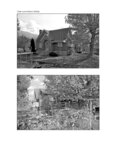
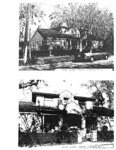
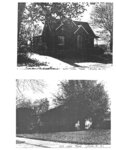
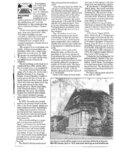
Show OMS No. 10024'()()18 NPS Form 10-900-a lJ1ah WordPerfect 5.1 Format (Revised Feb. 1993) United States Department of the Interior National Park Service National Register of Historic Places Continuation Sheet Section No. 7 Page 2 Clark Lane Historic District, Farmington , Davis County, UT School, and English Tudor styles 1 • These types and styles were common throughout the state of Utah at the time they were implemented in Farmington. Within the district, individual houses commonly have several layers of construction reflecting a variety of styles, plan types, and construction materials and techniques. Building materials common in the district range from adobe and stucco on the earlier homes to wood weatherboard siding to fired brick, the latter being the material of choice on the majority of homes. The use of random rubble masonry, common in Farmington during most of the district's history, is noticeably absent from use with the exception of building foundations and an addition to the district's oldest structure. BUILDING LIST - CONTRIBUTING BUILDINGS Ezra Thompson and Mary Stevenson Clark House. 368 West State Street. Built in 1856, this house has undergone a series of alterations throughout its existence. The original adobe structure was a two-story, single pile, side passage plan with a gable roof parallel to the street. The side passage plan in this form is not common in Farmington. The first alteration to the original structure, dating from 1857, consists of a one-story wing which was added to the ~est side of the original two story structure. The east wing was added in 1867. These wings, built with native field stone laid in a random rubble pattern, were placed to create a symmetrical massing on the main facade. The wings were staggered in front of the original main facade, thus creating a recessed entry which was covered by a wooden porch and balcony. Each wing was covered by a gable roof proportioned similar to the saltbox roof type. The next alteration consists of a major remodeling which occurred in 1914. In order to update its style and function, the original central portion was transformed to create a Mission Revival style house. Emanating from California, this style employed, among other elements, the use of plain stucco walls, curvilinear gables, and arcades, all of which are found in this example. The main porch is formed by four concrete block columns which support a hip roof which is features a curvilinear parapet which in turn forms the railing of a balcony. The upper roof, which was changed from a gable to a hip, is also graced by a curvilinear gable which complements the lower gable. Other 1914 alterations include the enlargement of window openings on the main and upper floors, and the addition of space at the rear of the house on both the main and upper levels. Windows on the main facade consist of large, fixed panels with decorative leaded art glass transoms on the main floor and single hung with decorative transoms on the upper level. No major alterations of the principle facades visible from the street have been executed since the completion of the 1914 remodel. However, a portion of the hip roof over the front porch has been removed. All original outbuildings have been demolished. Significant interior features include a fireplace which was added to 1Carter, Thomas and Goss, Peter. Utah's Historic Architecture, 1847-1940" (Salt Lake City: University of Utah Press, 1988) 2 Charles Clark, current owner of the house, stated they are not certain which wing was added first, but higher ceilings and door placement in the west wing suggests it was the first addition. L See continuation sheet |