| OCR Text |
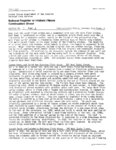
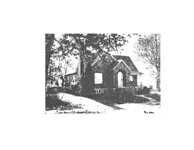
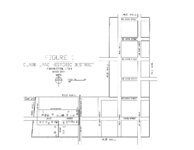
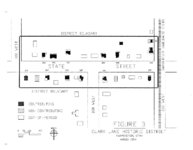
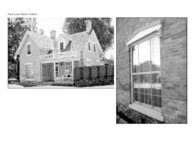
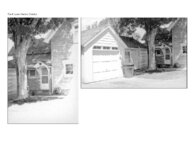
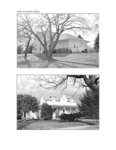
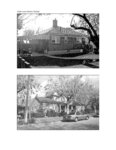
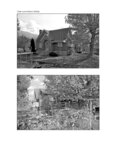
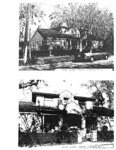
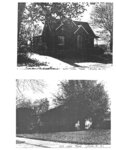
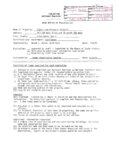
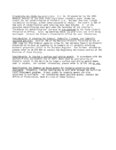
Show OMS No. 10024-0018 NPS Form 10-900-a Utah WordPertect 5. 1 Format (Revised Feb. 1993) United States Department of the Interior National Park Service National Register of Historic Places Continuation Sheet Section No. ~ Page __9__ Clark Lane Historic District, Farmington, Davis County, UT Narrative Statement of Significance The Clark Lane Historic District is locally significant under criteria A and C of the National Register. Under criterion A, the neighborhood is significant as an example of a family settlement pattern that occurred in Farmington and other communities throughout the state of Utah. The Ezra T. Clark family, which settled in Farmington in 1850 adopted a system of communal ownership which was establ ished and later abandoned by the Church o~Jesus Christ of Latter-day Saints. This system continued in the Clark family even after being abandoned by the church. The patriarch of the Clark family also envisioned the neighborhood as a "gathering place for his family. The impact of these factors is expressed today by the continuous ownership pattern in the neighborhood by descendants of Ezra T. Clark. Under criterion C, the neighborhood is significant for its concentration of intact homes of a wide variety of architectural influence dating from 1856 to 1940. Due to the communal ownership of property among the family, the neighborhood evolved slowly, generation by generation, lot by lot, over a long period of time rather than being sold and developed simultaneously as a large unit. Therefore, the district developed its unique character within a relatively small area. The architectural development is also expressive of the economic and social influences at work in Farmington over this broad time frame. Layers of successive styles and materials on a number of structures are expressive of the inhabitant's desire to remain IIUp to date with the styles, trends, and technology developing around them. ll ll HISTORY When the Mormon pioneers arrived in the Salt Lake valley in 1847, Davis County was first utilized by Mormon pioneers as common pasture land 4 One of the original assigned herders was Hector C. Haight who camped on North Cottonwood Creek near present day Farmington City. Haight ~ventually settled permanently in Farmington and is considered its founding father. As additional settlers arrived in the Farmington area, settlement occurred in a haphazard pattern due to families settling on individual farm tracts. Unger these circumstances, Ezra T. Clark and a number of other settlers arrived in 1849. He established a farm and subsequently rented it to a tenant who then built a cabin on the site. When the farm was vacated in 1850, Clark decided to move his family permanently to Farmington. They initially occupied the log cabin built by the vacating tenant 7• 4Leonard, Glen M. Masters Thesis, A History of Farmington, Utah To 1890. Univ. of Utah, 1966, p.18. 5Ibid. p. 22. 6 I bid. p. 26. 7Gould, Robert F. Ezra Thompson Clark's Ancestors and Descendants . (Bethesda Maryland, 1975). p. 118. L See continuation sheet |