| OCR Text |
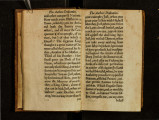
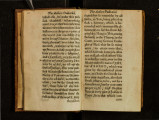
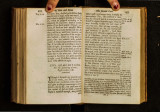
Show of' War ttnd Peace with fome part of h:r reve!1ucs. Petilius Cerialu in lacitus,lpeaks tor the Romans co the Lmgones and ocher q atLs, after this manner:. We, though fa often provok:,d, by the right of'Ve&ory,h~<~:ve only lardthu ttp· on y?m , that 111as neceffa' y to pre(erve peace. For, neither can the qutu of Nations be P· ocured without arms, nor arms without jltpends, ,or ftipe tJ.ds without tri· bu.tes Pertinent here are ocher things alfo whtch we have faid afore, when we fp;ke of an unfqualleague; to del iver up *PUle. de Ptr- arms*, fhips, not to have any weapons, fis .4t,4thiam not to have an Army. But, chat their lib. 4· Empire n:tay be lefc unto the Conquered, is not only a point of humanity, but oftentimes of Counfil. Among che inHicutes Plut~reh. qr~. of NNma,chis is prailed, that he hcrific'd Rom, 1 s. to Terminus without blood , fignifying, there is nothing more profitable to a iafe peace , than to keep within ones own bounds. Florus excellent1y: It is more hard to kJep, than to m.alz! Provtnw; • r.· . "' . thev aregot 6y (orce , they are k.fpt by Ju- IVlUS ; 1 atJ- / rr d f D . liru parari {i11- jfice ... • The Emba.na ors. o .· artus to !!~la 9uam tene- Alexander: A forem Emptre ts f~t lo(dant'l rm!ve.rfa.Au- ger: 'tis difficult t-o k.!ep that which ts too gu{h du~lum g1·eat :'tiJ more ea[r to conquer fome coHn-a~ ud P)utar- d h h chum : ptf''o' tries, than to hol t em.: muc more re~· .; .-r.t~ tLti£· dily do 1ur hands recetVe , than retem. >.ft.u i ~1-U'JI•• .,.· Appian obferves , that mal~Y peop~e wbo ":"nfl.•• ,z,.,; de.fir' d to put themfelves unaer the Roman IAI'•fif.ISntv. power , were ref us' d by them : and others had Kinos by their appointment. In the 0 jud~ment The third part. 637 jugment of St:ipio Africanu.s, in hi~ time, Rome poffdfed io much,that 'twas greedi-oefs co defire more,being abundantly hap- PY , if lhe loft nothing of what lhe had already. Wherefore, that form of prayer, whereby the Gods were entreated to ad-vance the State of Rome , he amended .. , ,. A 4 • · h h ld b I t d b ugnuus 15 praymg t at t ey wou c p ea e , ut to prai~ .. d in preferve it,as it was. The Lacedemonians, :Oion,that he and (at firti) the Athenians, challenged ~as n()( ambito themfelve <; no Empire over the Cities uousofmore~ they bad ta k en: on 1y ,c 11 cy requt.r e d t he m wI uhra tto h ek ehe,pd . to ufe a f0rt'n of Guvernment accommo- Thue. x. I joe. dace to theirs , the LPcedemoniam under P,m. vemo(ib. the power of the Chief 11 the AtheHill.ns at orat. dt Che-rf. pleaiure of the people; as Thucydide s , Ifocrate.r, D~moflhmes declare: and !lri- I ftotletoo,in his fourth 'De repub. The like was done, as Ttrcltu.r relates , by Arta- Annal. G. Janus at SeleHCtlil: He committed the ~ common pecple to the Chief men , accor-ding to I. is own u.[e: for a popular Govern-ment is free, the domination of a few more nterto royalt_r, But,whether fttchChanges make for the Conquerors fecuri ty, is not of our infpeetion. If it be lefs fafe to ab-ftein from all Empire over the Conque-red, the mater may be temper·d fo, chat fome part of the oovernmen t rna y be left to them or their Kings. Tacitus calls it a Hii. i: cuRom of the Roman people , to have Kings alfo for in(huments of fervitude t. t Eidtm AtJ; ti!Jch¥1 infer- I flitiUiulll rtgum ditijJifiiUI. Srrabo E4'17).eit PfAII.(JIWJ lttaol~~n. Lucanu; · At9; "111114 LRtio qq11 fer""it purp~na ferro. Vld. Panegyr. Ma~ -~~ So |