| OCR Text |
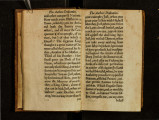
Show 66 I w~r 41ft/ ltii&C 4 . . . ong Plan torment~d. In the tioc:h in hts r.c1gn, and - ~r~l1lJ emory of S. Eliphms a Scot Martyroloti's is cclehl'atle lit ecaus'd -to be behcadc ride & and his fe~lQws 'w~&V ~~=~.x ~$. Peirtfi,a»f. ]141J, diiJD,beJI(ffn "' ~'"f . ft . then did they ack._nowledge tht 1ant , d f cC;' .mpero ur of Heaven . Sdo we rCeal o cer· ·n. h tain S earmen convcrte unto mn,t at h P 1 ofe rather to dy , than to execute . t ey c h . 11 h Ch · . the EdiCl:s & judgments agam~-r t e rt· • Pitfor de 1ure it' 'Twill be all one* , tf a man be btll. n. ~J· taps· ded \tis unjuH which is comman· · ~~~~~or,' that thing is to ~im unla_w~ull, r 1 o as he cannot put off that opmton: 10 ono h r 'd 1 d as ap~earcs ~y what we ave Ial a rea Y· C X X X v I. what they fhou!d do , rvhen they arc in doubt. BUt if a man doubt,wherhertherhing be ia wfu \1 or no ,_ muH he then obey, or not? MoH Authors are of opinion,thac . he mu(l obey :nor doth that ~i nder' 1Jo ~otJ dubJtlf4r,_.lfot' what ;·ou douht of: becaule( fay they) neflceru.. he that doubts contemplatively ' may !II his a8:ivc judomeot: be out of doubt ; For he may believ~, that in a d_oubtfull matte~ he ouoht to obey his fupenour. _An~ c~u . 1 it c~nnot be denyed ' but thts ollhn·, J·on of a twofold judgment hath place L. dAm,.um.dtintm~n a8:ions. The Civil Laws,_not~f lt. ]. t.LJbtr 1 R !ans only but of other Nanons,In hcmlq. P. ad L. t 'lC: D d t cmly qrant Aquil. L. non fuch a circumflance , o no 2:l !'ilittt~r. § . 'f#i l l 1 'en. tit. n.§.r • Ltf.IS Long .. tit. 9'· de ttrll\ JU/flt deN. I. PA.U • • '1'. L a l-it I ' I. tffo[s.Ltguwifigtt.·lt ,, m.s.c, ~. • · • • • impunicyt 46'7 impunity t to thofe that obey,bundfo de .. t chq[Dfl~lll.dt ny any Civil aCtion aoa.inlhhem. He doth pro'Uilltntza~ 3· h d r h t:.J h d . Many m:~gt- t e 1mage, tay t ey, w o cornman s Lt tl:rates accu~'d to be done: and he, who muH needs obey, fur unjufr is in no fault. Necefficy of the power ex- 1laughter. ban cufeth,& the like.Arift·tle himtelf in the beenpumlht fi.f.t ht.s E r. h tc k s,among t h~ i.e t l1 at d o wr me- owfats :a bnuyt Enxevce-r tfung UllJUfi:, but not un;rl_{flJ , annurne- cutioner call'd races the fervanc of a Malter comman- inqueftion,for dina · and he faith l-Ie doth ullJ·ufHy they are ex-t b ' • . ' . . ' cus'd by the rrom whom the aC.lton takes begmmng ; neceffity Jayd upon this ground, becaufe the faculry de· wpon them' liberative is not full, accordino to that proceedifi~ verie * • b frotn the ({ :g .. ' nity ofthe ,. Commandtt., ThtJje men enjoy lmt one half of their and the fetr foul' . of rhe o~ Whom their imp r ous M afterJ words beyer. UJpi.an out of CtJfus ' 'ontroul. faith 1 a ftr-vant hath not oftc.nded , _wh? hath obeyrd his Mailers command. Mi-thnd;~ ces d1fmlll the . ft:rvants of Auilius , bemg confcious of the plot a~ainft hi ~ Jif~,u" punifhcd; aud the childrtn Jlkewife of one tha~ .had tevoJced tr~rn him: App1an. Tiberius Gracchus was ac<}IJ•trcd from fhc fau!t of the N'umanrin le:,~gue, becau!C he had oftcnded at the con1mand of another, In v ·ltnu 11e&tff/tti41}/J)2 c~. Seneca, * lit itl11d qt~o Philo 11titur : AiA@-71ipuii.JI't 1 ll~tin~t ri~ >-.·~' · ' And that or" Tacitus': The qodJ ha1Je gt~en the Pr!nce fupreme judgment of Aft~~l. J_. 1htthmgJ: to [uk;eEfJ is !eft the glrJr t~fohe- m.l ll:Jus. m his d O c"D,r, > f I J 9, Qflt10n J tence . . ..r~Jo s_ lOh (m .~he fame writer ) faith, PrinC'~a was by Ttbettw abfolv d .from the crime ~re like ro rt~a<> f the Cl~il war; Becaufe. the [on WM not fon,f<lldic:rs , • . db/tto re)tt1 th~ C'7m~andJ .Ijthe Father. wrath. If h · , - ~ene'ca : · |