| OCR Text |
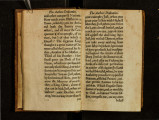
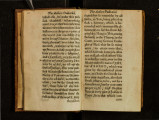
Show of War And PtACt oer. But this caufe for the mofl: part is ~ixed wich other , which yet is it felf mofl confiderable , b~th in conili tuting peace, and in ufing VICtory. For the re!t · happly may be remitted out of compaffion: but in pub lick danger ,to be fecure beyond meafure is unmercitulnefs.Ifocrat es writes to Philip: Th~ Barbarians are {o far to be (ubdued, p;s it fhall be fufficient to fecure Jrtgr~rtb. your own Coltntrey. Crifpus Sallujftus, of the old Romans : Our eAnceftors, being moft religious men , took__ nothing from the Conquerd, but the lrcence to do injury, A fentenct worthy to be fpokcn by a Chrifiian: wherewith agrees that of the fame Author, Wtfe men wage Jvarfor the fltlze of Peace, and J~ftein labottr in hope ve repub.l. 1. of cafe. Ariftotle laid more than ontc, c. 14. & 1 f• War is ordaind for peace , and bujinefs for Nic. to. c. 1· re(f. Cicero's meaning is the fame, whofe' . mofl pious fay ing •tis: Warmuft be foun· ve offtc. I. d.ertaken, that nothing elfe but p·ace be J aimed at. And anorher like it; For thit T;o. x.i..q. .r. b d h 4o.art.x. ad 3, cau1e are wars to e wage > t at ~e may * Altxand. without in_jr.trv livein peace. No~hmgM· Imp. Arra_~ fercnt are tbefe fran what the Do6tors of xerxi 'Perfx: true Relicrion teach us That the end of Manendt•m . 0 h" ' h bl , • ;11tra frtoJ warts to remove t mgs t at trou e our cu.q' • J' c h . f 7\ r fines nibil no- Peace. Berore t e tunes ? Jvtnm, as we vando, neq1 dt- have noted out of Trogus,tt was the man· here qttenquam ncr to defend * the -'bounds of Empire, ~~~tlrta fp:ella rather than to enlarge them; Every King ,,_,. attl1tJ d . . h' Coun· ·i.ncipcre, fed juo was 'entente to retgn m ts own. e[[e canmzmm. trey; !!hey did not fo much feek thetr own. power power, as thc1r peoples glory .= being fatisfied with vtaory, they n:fuit .. d Empire. To- whtch m deration S • .Auguftm ear- De civit. Dei ndHy recalls us, when he fa\th,Let them lio. 4· 1 f· 1onjider, left perhaps it be not the part of ' xood men , to re~oice t ~n their Empir:es t Cyril in his latitude. He addeth : Tis greater felicitr f · a~ainft Ju~ to have a good neighbour for ones fnend, liancr>mmends than to Jubdu~ an evtl neighbour that is tKh.e Hefibrewh .• . h . tngs or t 1s, An enem1. And the Prop et Amos , m that they were the a,Ammonites themfelves, feverely re- content with prehenas this defire of extending domi- the;r own nion by War. To this exemplar of an- ~unds. tient innocence, the p.tudent modefiy of m. 1 ' 13· the 1\pmans made the neerefi approach. What wer~ our Empire at this day , faith · · Seneca , unlefs wholfom providence had L'b J l · 1 h d · h h C 1 mtxea t e conquer . wtt t e onqueroHr s?. eap .• 2..t. •u·e '"· Our FotmderRomulus(they are C.!audtU/s words in Tacitus) was of fo prevailing An»al. r. wifedom , that he made many people {it i· z.tns, the fame day, they had heen hi.r ene-mies :He adds, that nothing elfe und1d the Lademonians & Athenians, but rheir kee-ping off rhe conquered , as Altens. Livy faith, the Scare of 'R.!lme was advanced by receiving their enemies into the City. In hiflories are extant , examples of the S•bins , Albans , Lattni, and the refl of Italy: til!'atlafi,C£/a~triumph'd over the G,/ls, andenfranchiz:.'d them. Ceria/is in Tac1tm, in his Oration to the Galls : Te 1fltlr .(elves for the moft p.-trt command our Legions ; J' govern thefe and other Pro- 'llince.s |