| OCR Text |
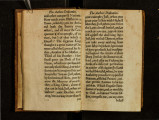
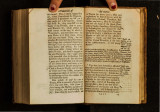
Show 104 Jf fV4r 4,;d Puce rioht, fuch as of old WlS the Kingdom Ptoc,piuA. ofthe Vandals in Afnca, and of the P~ndll.'r • qoth"J in Spain*, when the pcop1e de- .Atmol.:r..?.o. & · · d 1 fi l d' · l 4·H· l?ote , nerp, ~sot as uey w~r~ tip eo.- ,. M~i'iJ mdqr1i 1ed f; for every a& of)uch K111gs may ·ve(ogi~'.m i~~ · be rchdred void by th~ie that have given Bcke~mr, vJde them a power revocablr ; and . therefore, Mar~«nam t. l · h r cr n. h 1· 16. ~~re 1s n~t t e 1atne erre\,;L, nor t c ame t a~c de Hmt- nght, as 111 other caf~s. 114 ctiam pttJdi-dit Procripi114 Got. :r.. de LMtgnb~~Ytlil. PAul~s war114{redi l. 4· & (, de B11rgundis Ammidntu lib. 2. 8. de ~old4vis Lttonittu c b,tlcortdy· l.u, dt l'tf.t .AgoliJ llpr1el A.fos 1•~nnts Lto /,b. t· dt Nnrwagis ai( Grtil. Neubrigcnfis rtg,cm ibi fallutfl qui(qui4 rtge111 ocd~ij]et. ~ ~rdis & Jaugibtu fimilia babes iPJ txcerpris Dionii. f , XLVIII. Thttt fame higheft £mpim are holdm Jr.tl/y, i. c. {[[icnablJ. THat ~hich ~ have _faid, that f:J~ne ; Empues are m full nght of propm· ty, ; . e. in the pa trim on y of the Ruler, . .is oppofcd by iome learned men 'v~itn 1;1./)tllm,co,t,l/1, this Aroument, That free-men are ntr trU I , I b • J' • . h "' · · in commerce. But , as· fC!>W~r IS c.lt ~r Lordly. or Regal; fo alfo Ltberty 1se1· ther ptrfmal, or civ.il ; and again, either of Jingle perfons, or of all toget~tr: for the Stoick~ too did fay, there u.a ~ \azfo-rJ~,.. certain fhvi'tud~ confilling in • fubje· P. "t.· Latrf. ction '. and in the holy SctiptuW tnt a Sam.2.2..18, ' 'd h r 2. s,m.xo.t.. · Kinos · fubJcCts are call is 1ervants. ~ Reg 9· :.1, As ~herefore perfonal liberty excludes ·Ma!ter.fhip, fo civil liberty oppofes re· gality, and any o~her ditton properly fo called. T'he ftrfl pArt. ~os ~al\ed. So Livy oppofeth them, fa'ying, The people ofRome ,are ntlt in A kjngdo11i~ Lill. 1. f. bNt in ltbert1: and elfewhere he diHiR- 'Thucydides: e.uilhcth the people enjoying liberty f.~,~Tbsracum ,.... , Ic.r om th. o i.e t ha t 1I' VC: d un de r K'm gs.. ~p"a"r e•r· (uaenfocrciaa . Cicero t taid, Either the K1t~gs Jl!ouia N~r~tllltm mt-.. not have been expeit' d, or ltherty jbouid ll~i11li.~~p ej. have bun given to the ceotJ/e rCA/1"1 and 11'tatt 'dJem- . . r_ T • ; ' h .,. •ffe {tntm- n~t m words. Aftet thefe T "7't":, T. e titltn, tJMO •JMil · Ctty of Rome fro,n tht hegtnnmg WM Rtgtr.Jofc:phus . under Kipgs : J.. ~ru~us hroHght in Li· ~tiq.hift.J. btrty and the Con;uljhip. Strabo faith 13. AdKtf.t~ of A".'m tJf H4, 1· t was1ro met1· me f ree·, 1r 0mc- Phe'Pro•sl.o jCqu:ct elrio-. time under Kings~ And frequently in Epifl. 11.4 • the Roman * ~a ws , foreiners are di- PGptd~rUJnli· v1ded into Kings and free State:. Here bcrorum_,rtg-~ then the que!lion is not concerning the qNt f:.'1orp1 1 ''!'. l'be f · t: 1 <J 11/I.XMI'Io lAI• 1 rty o 11ng e men, but of a people. usl.6,c.1.o.~e And further, as for private, fo for this lndis :]amlij publick fubjetlion fome are faid to be, "''lllium 911i not of their own right, not of their own perpttM;"JrJI/1. power t • Ye t proper1 y , when · a pe.o p l e .O,c.e~•amlt- 1 li.beri ~ is ~licnatcd, the men themfelves are not regu;,. exp~rtts.; ahenatcd but the perpetual riEht of "O- t Lib. 3• dl verning them, as they are a people. so, tegib. when the freed fervant of f. Patron is t~nal. •· afiign~d to _one of his (hi~dren, it is not .,. -D: ;;u6 6 the ahenat1on of a free111an, but he tranf- dtjMIU&Iis ,,. cribes and makes away the right he had tllpe~~o~is. over another man. Nor is that more t H111c tUa: • firm, which they fay If~ Kina hath · ~~.t ur~hs,f!• ' o •gn, qMJ ,,, .. • • , IICJ· ~flotMIIJ Jlll_•l .•liiJIIallll•futrrt'fJt, ErJ i{IM 1'1· CtllltiaMJ i• JMIIII&t[late 1 Llv,hb.JS,& llbo1• · gotten |