| OCR Text |
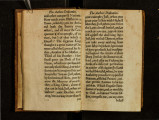
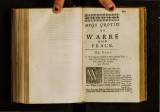
Show / - o" WAr ttnd Pettet 12. 2. 'J I I ' d' 11 · nem dle ad flopu um, xx.Ju tee dsmnari. Sic quoq~ appe a no l'us ..,.,.., (1t4 t71im lttti locu; bic d:ari. Ss' l'b . . m nonamp I "'""'' "" 1 ercnt u reu . ' . raviffimo probt·o~ Regi cul· debet) iis oullam eife dlg~1 tAottembu'n~ Re"cm fi qu id dclinqnat l'b · · c:rtc:ns ra ·" t1 • tum 1 en pacr_15 ' 11 . erimente fed aver(a •lttbu~ cunB:Is morte mulet;an '_nu fc~:onis neg;ntibus. Sti'1JiUJ ad ill1td 4, & commercia et~am {i e ~idam hoc loco volunt tres p~nes u£n. populumq; patrc: qu ~r 0 timatum regia: pordbris. Cato pohti:r. comp~ebhe~~~ ,p~fti~~~ ~rdinata~ fuiffe Carthaginem. ~mAlt detn uuuts p :l.Jift.too. RomAn Kings;for then all matters almofi " throuah the Royal hand. Romulus wen" o r d r . h T . reigned over us, M he pleaJ e ~ 1a~t . act· t·u s.. It is mani+'e:ft,at the begmmng of the J' r . h p . City Kings had all pow~r ,lalt ompom_ut; et Halicarntt!fenfts w11l have fomet?ll10 ~xcepted by the people ev_en at that tune. But if we give more credit to the Roman . Authors , in feme caufes there lay an ap· peal from the Kinos to the people, as Senat: a hath n ted ~t of (;~era's books de Re ublica, out of the Pontifical books ~1· £ pandFene{tella. {hortly after 'Servttu :Pullu.s adv~nced, to the Throne ' not fo much by l·ight ' a·s by the favourable breath of the people, yet more abated ~he reoal power. For' as Tacitus fpeake~l' b:'ejhtblifht Laws, which even the Kmg~ themfelves were to obey. The \~f~ ~~ have we to wonder at that vvhlc d.{ 1 .. th The power of the firR Conful!; 1 • a1 , 1. 1 than ferd from the rega \ in . Itt e ~ore e alfo that •twas annual. S\tch a mtxtur t of a. Democracy and 0 p·u ·m ac y was ad Rome in the dme of the lnterregnn;;;~n •m the firll: times of the Confuls. certai.n ''-· 'tbt Fir) l4rl. · ctrtain ~ffairs , and thofe of the greatell 'moment, the will of the , people was a. law, if the Fathers would go before them · with their_authol·~t(,and (~sit were)pre- • P1urarchus pare the btil; wh1ch authonty afterward, Coriolano: , the peoples power encrea fed , was on ely Populus jus n111 for a fliew, when the Fathers, as Livy habcbat aut !e-d m · ft· b . h h gtm tondtnt/1 an_ .utony zus note , ega_n vm t eir 11ut aliud qr1;d vo1ces, but the Affembly dtd what they jubendi nip St-· pleafed. For a.U this , in after times there natus prttcefflfremained fomewhat of a .mixture, whilft, fe~ a~llo;-itas_. · h f: L · · {i k h h G SJmJ!em mJJt- as t e am~ ~y hpe~ .. eft h' t e overn- ruram in Gc-men~ was m t e an 1 t e Patricians , nuatium rep. that ~s , of the Senate , but the Trihunes, fuis temporithat IS, the Pltheians ,had a fhare, .to wit, bus obfervac a right of forbidding or intercedina. And fh~leocondyfo Ifocrates will. -have t,hc ·t.Afhmian L~~.'tfb·. 6• Commonwealth, m So/on.s time,to have ~een * an Optimacy mixt with a Demo- ltpti(Jfri•r •ea· cracy. ~o•e;nit~. fUI'?- · LV. Whethtr He ca!J have fupremt power, th#ft u cdmprehended. i~ an umqu-alleague. · ~~· . ll ~on thefe. premifes , l~t us exam in - iome quetbons, which are of frequent ufe in the argument we h:~.ve in hand .The firfl: is'· whether He may have fu~ preme_ power, ~ho is -compreheMded in an tmequal leagu~. By an unequal Le~te;u't 1 underHand' here , not t'hat which is mad~ between parties uneq'ual in their \' I forces ' ts the Th~han City in the time of |