| OCR Text |
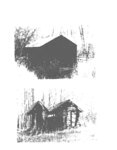
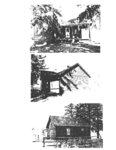
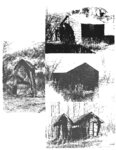
Show 3 hours., The prjlctieal portion was mueh !Jimg,e r--candidates had to pack a horse usili~ sWing and diamond hitches, demonstrate the use of a campass 'and elementary suryeyin~ and prov:e, 'cookin~ skiUs. Tremewan had to es~irnate the number of telephone poles: that could be (:ut from an acre of Nevada pinyon-junip:er.. Given the" small s'i~~ of most such trees, thi:; was no mean feat. "Some' 'o f the answers,/' iretnewan saId; "were really r idiculousl,49 In the ellrly yejlrs, promotions Cjlme very rapidly for cQmpetent personnel. William R. tfyr,s t rose :from assista'ht ranger to fore:;~s,upervisor in 2 mon~hs.~ Dav:id Laing, temp:pr,ary lore,s t guard in SeptembJ!r 190" was silpervisor of the Challis Natic)J)al PorE'S! oy f9.08. 51 ).e~)J) F. Knejpp, 'a man from the Chka:~o wllterfr()nt with no, 'f ote:s try training and little 1drmal education; be(:am;e district forester- in 19U at: agE!' ?6 after seryingas ,assistant chief of the ~razin~ dtvisi'on iii Washington. 52 Virtually all 'employees du"ring the early yeats were males' Qf northern European extractJIl,n. Beauregard Kennel' hired a eouple of' ,Native, Amel'icans~ /)ut In$pec't or Benedict, fired them. Few Mexican-Americans" Orientals, or southern, E,uropeans !crund' positions. Th,e re were a number of ~rnrni~ranrs, but uke Gr~ndje:all of Denm'ark and John F" Squires ftom Scotland, vJrtually aU were {rom northwestern E,urope)3 Some women were hired as derks, but none held seniQI' position,S,., Mor.e' typical was' Margar.e,t :l ensen of Mendon; UT, clerk of the Gaehe, National rorest for 20. years startin~ 'in May '1907. 54 The staff 01 the Sevier National Forest iii 190.9 seems to have .been fairly typical. The fb,resJ ha~d 10 salafied employees including: the supervi:;or, deputy, :and clerk in the supery'i,sor's office. and twp ra,ngers" two deputy rang~ er$, and three a'Ssistant rangers on tbe, ,six ranger distri€ts. SuperVisor Snow llsed one of the deputy ,rang.ers in what today would be considered a timber. S:taft position. Of thesla'ff all except the clerk had Peen stockmen, two had w.orked ,In lumbering, and Qne had b~n, 'in clerical work before enterin,g the Service. Two s,tilJ own~ property, and livestock O1;ltside the forest. Most were go.od 'Workers, though twa 'Were deUcient in c1e~icala:bi1ilj' and edUCation and did not do: well with paper work.'·::> !\tany ranger.s and their families l;iveda hard life, but probably not harder than others Iivin~ jn the ba.c k .country ~U'ring the early twentieth century. Th'e Dixie National FO.r est reported difficulty ill finding rangel'S willing to work on the Truml»lill diviS.i:on an the isoiated Arizona 5trip.5:6 On SOme forests, the ran~er might have to live' in a tent, an old miner's ca'bin, .or a lag Gabin he built with mater:iids furnlsh~ at ,g,overn'tTl'ent ,expense,. He n:!'ight spend the winter snowbound Wlth his .family, and a move' c~uld become ,~ significant adventur~., . R:anR~rs~ wives serve<! essentIally as unpaid employe'cs In ,addi.tion til their household 'a nd nlher duties. Some worked in tlfe communities where th~y lived, in some (:~s as pos.tmistr~s,es or telephone operators. For the Wife, househOld c.bqres resembled those of other rur,al women, with thek ·sadiron'S, wOOd stove:;; and wash~r,~.s. In addi~ion; however, they ot't en had to check firefIghters, in or out 0.1' cQUnt sheep and cattle onto the 'orest•.5,7 a The forest supervisorls life; pnthe other hand" was dlfferent. Inslead of enduring the hardships of the back country, they and tne.'ir farnil'ie:s could experi~nce the advanta~es of rural town Of city life. M0reover, while they undoubtedly 'spent more time in the Held than supervisors today, rouch of their work cans'isted of (:0[reSpMdende. with the Washington Office or the district fores't,e t about such matte'rs .a.S the interpretation of'the l'lJse Book" (the pocket-Size manual of Forest Servic,e procedures first PIJbli,shed in J90.5J, preparing' and nan's". mitt-Ing r.eports, and hiring and evaluating employees. 58 The sUl!ervisor kept card files on temporary pers6tinel. These cards listed f.or each person the name, address, age" marital statlls, occupation, type of wor~; reputation, sobriety, and rec;o,rdin Forest ~ervi¢e employm~nt. If ,a ·sample from the Caribou Nat·io(Ial F'Qrest ts representative', the supervisors\ were' v.ery f.rank to their a:ssessmentof tile r-ecord. One was listed as "too heavy :t.or' Ii~ht work and too H~ht for heavy wQr.k, but mighty g00d with a .SJ!>ooo/' another Was said to be "poor, didn't knowhow tQ work," and a 'third was reported to be "gOOd, does ve;ry gQod work as far as knowle:dge e:,x tends' ,,59 m~h PubliC Relations a.n d Cooperation A ~ubstantial part of the: supervisor's ,t ime involved public relations with the forest users. On the ~oise National Forest, SU!>'ervisor Frank Fenn deli"er~ I~c: ture:s on 't he value of the: 'F,d rest Service. 60 On the NJ!bo, Dan S. ~ack~ot one Qf hi'S rangers to help out a dl~ gruntled forest user witli a :survey so his' forest homestea:d could go to 'p atent.P I Perhap.s the most imporfant cOoper~t.iQn t®k place on the old P~yette under Guy 'B. Mains. Between 1905 and. 19Q8, crews. from a number af lum\>er companies lrieludlng the Pay~Ue:, B,oise, Barber, and A.•W. Cool<,. together with Bdise and Payeue National Forest emplQye"es~ had worked to~,ether a numl1er of times in firefighting. After contrQlling a fire on Bucl~ Creek 'in 1908, Mains and Harry' 'SlTeUworth, Payette Lumber Company land ~gent, disl:ussed the possibility 'Q1 sbaring respnilsjbiHtres, the IJ:;e' of' State fire wardens, and other related matters. By 191.1~ o,u t of the discussions grew the: S,outhern Idaho Thnb-er ProtectLv,e Association (SITPA), :said to have been the third such .Qrganization in the Ortited States, and perhaps the, most successful cooperaJive eflort in nistr,ict Hater Re~ion) 4. ~ains be:came the first president of theor.~anization. Through SlTPA's' Influe'oce, State fire wardens were removed from politic.al appointment, and area'S of responsibility bet\\tel!n the Sta'te, priva,t e owners" and the Forest Service in: pre- .. vention, detection, and suppression were,spelled ,a ut. 6Z F'oresl PoUcies In:managing the foreSts, the' Service:ope,r'ated under a of ge.neraI p.o lides•. A~ outlined by Pinchot in 1908, these. policies covered: h Protection against fire and trespas.s~ 2. Har·vesting of miiture timber under polide.s a.ssuring sustained yIeld a.nct watersh'ed protection', 3. Jmpro\tement, of -timber .s ta,O(ls, 4. Protectio.n of the' numl»~r 39 |