| OCR Text |
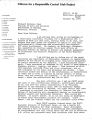
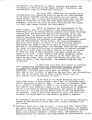
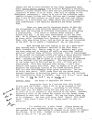
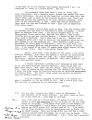
Show 3. Breakdown of the Issues, continued Since Utah still takes a position that resources on the public lands belong to and should be utilized by the State, is the Federal government vulnerable to suit in not legally defending its public resources and the obligated management of them? In Utah, policy decisions of the BLM have been made in the light of Utah's development needs. In the RARE II process, the Forest Service asks the STATE what its development needs are. I thoughtRARE II was to be a public process. Yet the State plans to make its wilderness recommendations - AS A STATE - to Congress. And, in the light of ultimate wilderness area recommendations on both Forest Service and BLM lands. Except for the environmentliasts responding to RARE II, Utah residents support the State development philosophy and ..policy right down the line and ultimately are disfranchized in this public process by the State taking over recommendations. What means is there to force the Federal land management agencies to make policy decisions on behalf of the nation's public? I am not downgrading the rights of Indians. None the less, there is a whole accretion of law developed in this nation based on providing the nation's public fair management of its public lands and resources. This includes Indians as the public. On what grounds do aboriginal rights supersede succeeding constitutional Ii \Jf^ developments? . the issue of wilderness management on National Forest lands. This issue has still not been really addressed by the Forest Service since this Agency does not want ,At, ^ wilderness. It is still at a position of opposition -AMJOtt, ^ not management. How will the issue of wilderness classifi- p^ cation (which will take place on the Uintas) ever be resolved under conditions of Ute control of wildlife and fisheries resources on the National Forest lands? Management of wildlife under wilderness conditions is only now being explored by environmental groups. There is already conflict of purpose between State Fish & Game departments and the Forest Service on wildlife management. I think this would prevail under Indian control. The State DWR is supported through hunting and fishing licenses - therefore, its prime objective is V the production of huntable and fishable species. The \ftJ^ \ , v Ute's want control for economic purposes. Under their \ \\r^ control, will management objectives change? Yet the Forest Service is responsible for all wildlife and fish c\ species habitat management. Additionally, under wilderness classification conditions, wildlife habitat is not manipulated; the natural ecological succession prevails. How can this be resolved? |