| OCR Text |
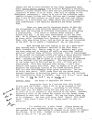
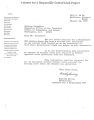
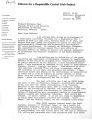
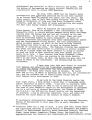
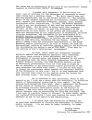
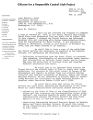
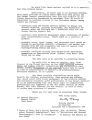
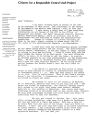
Show development was essential to Utah's survival and growth. And the Bureau of Reclamation had their economic feasibility and cost/benefit ratio to defend this position. By July, 1978, CRCUP had two reports which contradicted this long-held position and we put them together in an Issues Paper*^o provide the public the real facts. The other report, that of Salt Lake County Attorney, Paul Van Dam, based on University of Utah and Utah State University water research, laid out the facts of water availability and supply for Salt Lake County without CUP development. After we digested the implications of the Power report, five of us prepared a cost questionnaire on the Bonneville Unit, to obtain written answers which would challenge exactly what the Bureau had and had not included in its own computations. We included this in our Issues Paper and sent this to Secretary Andrus in early September*. In spite of repeated overtures and pressure from other Administrative staffs and the Environmental Policy Center, the lead environmental group on water issues, we still do not have written answers. The Bureau has tried to get us to meet to discuss Bureau methods of calculating costs. The Regional Director has explained the great and many difficulties in providing us written answers. We are at a point right now where Interior is goin.g to attempt to work out with us what questions they must answer and the means to do this. I have learned from Gerry Kinghorn, former Assistant to Mr. Van Dam, now working in the Water Qualify Dep't in the State, that, in fact, the Bureau has gone over its costs on which it was authorized; the stonewalling has been deliberate. I have gone into this much detail to indicate that without the objective and independent economic research to refute the Bureau -heretofore the only authority on its economics - we would have really made no headway. We would have had no tool in which to question the need for, the alternatives for, and the probable one to three billion dollar cost of this federal water development in Utah. In my work in the Rocky Mountain region the last eight years, I have gained a great deal of knowledge about public resources on public lands. I was sent to southeast Idaho by a wildlife biologist in 1975 to try to publicize and stop the rape of that beautiful region in the development of phosphate ore by a collusion of mineral developers, the Bureau of Mines, the U.S.G.S., the BLM and the Forest Service and the Department of Interior. I had no political expertise, then, and could not interest the major media in the country in Idaho's problem. *I personally delivered this Issues Paper to the Regional Director, Bureau of Reclamation in Salt Lake City in early September for his review. ** Professor Power has a copy of this. I have used this Issues Paper and supporting material to inform Office of Management and Budget; Council on Environmetal Qualityj Water Resources Council; Chairman Giamo, House Budget Committee; Sidney Yates, Sub-Committee on Appropriations; key Senators and Congressmen; and Environmental groups |