| OCR Text |
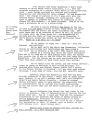
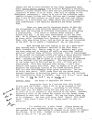
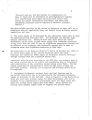
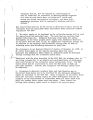
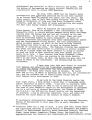
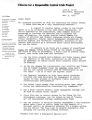
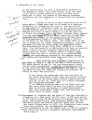
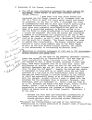
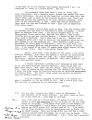
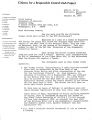
Show % * 5. 3. Breakdown of the Issues, continued Moose populations are increasing, having moved down from northern habitat areas. Elk, deer and raptors are prevalent As northeast Utah and southern Wyoming industrialize, the Uinta Range will take on immense importance for wildlife survival. The most effective management to protect K/UW such resources will be Imperative under public demand ({j^N^ to use this Range for recreation purposes, alone. " jU^i** "t/^ t S ^ \fi I am not able to think my way through theHJ'ene-£*#^ira "mere Indians" won't stop Utah's mineral and water developers L-have the -uneasy fooling' ffn^fr^he State believes it can manipulate Indians, when the time comes, where it cannot effectively deal with a slowly, growing environmental force demanding wilderness protection and study for both Forest Service and BLM lands; no road building on these and wildlife habitat areas; no power development for export out of the State; no massive oil shale development in the unique Book Cliffs area - a relatively unknown QJ&S region to the nation; no Kapairowitz coal development - although this is in the picture again with IPP and Utah Power and Light at the Lynndyl site; no wild and scenic rivers; no road development in the Brown's Park area. Is, in fact, the State of Utah >look±ngg ffi> sewing up control of northeast Utah's land and water resources by getting Congressional approval of the wildlife and fishery control on former tribal boundaries .b^ the Tribe? the responsibilities of the Forest Service to manage wildlife and recreation resources under the Multiple-Use sustained Yield Act of i960. Do Indian "rights" override existing mandated management responsibilities for public lands'resources? Is this an issue here - since the State DWR manage the wildlife? The Forest Service only manages the habitat - without which you cannot have the wildlife, of course. In Indian issues, can separate Federal Agencies legally defend their management responsibilities? Can the Forest Service go to court to protect its mandate? Should it have done this? Is the Forest Service vulnerable to suit in not doing this? in ultimately cooperating with the Bureau qf^eclamation on the CUP? since we do not have a >ntt$o£&L Department of Natural ResourceSa^s^esfc., will Agriculture not sue Interior? If the issue is one of Indian lands, is Interior the superior authority? Is Interior vulnerable on decision making since it also has responsibility for mineral and energy development? In northeast Utah, on which side of the fence does, can, and ought Interior to come down? U.S.Fish & Wildlife Service, in this Agency, has been fighting valiantly to protect wildlife resources - representing both the Forest Service and the silenced Division of Wildlife 'Re.sou^cej of the State. *utilizing stream bottom.habitat. Inundation from CUP reservoirs on South Slopes will eliminate/reduce populations. |