| OCR Text |
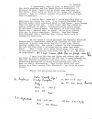
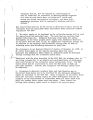
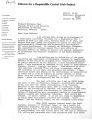
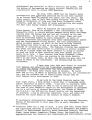
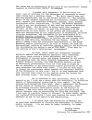
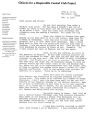
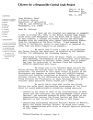
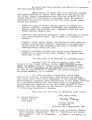
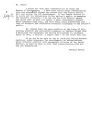
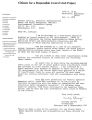
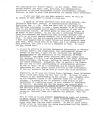
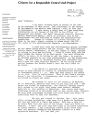
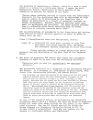
Show TTtA^JX^ Introduction, continued in trying to protect stream and wildlife resources; the U.S.Fish and Wildlife Service and the Forest Service, responsible for protecting and managing wildlife and habitat resources have been ignored; University professors, are threatened with job loss if they oppose the CUP or their resource expertise is greatly compromised in research grants by the Bureau of Reclamation in having to sign agreement to work " in empathy with Bureau goals"; former Governor Rampton stated in 1965 that there would be no water allowed for stream flows. In contrast, an effective P.R. program favoring CUP development has been carried out by the water developers - even to the extent of "educating" and "using" school children - in pursuading Utah citizens taught to accept authority and to reject the recreation values of natural resources, that the State cannot survive without this water development for beneficial purposes only. In western "water law" these are irrigation, municipal and industrial uses. The CUP was authorized in the 1960's as a participating member of the Colorado River Storage Project Act. Utah has a stipulated water entitlement to water out of the Upper Colorado River in the Upper Colorado River Compact. This is shared with Wyoming and Colorado. One of the "rationales" used in Utah for CUP development is that Utah has to transport waters flowing naturally into the Green River from the Uintas (the Green is a tributary of the Colorado River) and to transport this into the Bonneville Basin in the west to keep Utah's water from being developed by Arizona or by California. Since Utah is guaranted over 1 million acre feet of water annually, by the Compact, this rationale is a myth. Part of the benefits of the Colorado River Storage Compact was to be power development - ultimately tying in the Colorado River in a massive scheme of conveying water from the Columbia and from the Yukon through a Rocky Mountain Rift - for purposes of both water and power development. Utah Power and Light and Intermountain Power Project are in the process now of acquiring water rights near the Lynndal site near the Kaiparowitz coal deposits for power development. Part of the Uinta Range stream water in northeast Utah, transported across the mountains to this region in west/southwest Utah, under CUP development, is to be used by Utah Power and Light. We do not yet know, or cannot determine, the power grid development planned for this region by both private and federal power development. There is a dollar incentive for Utah tied in with the power development under the Colorado River Storage Project. I understand there are millions of dollars involved in existing and proposed power activities. Until this past summer, when Professor Thomas Power, Dep't of Economics, University of Montana, completed "An Economic Analysis of the Bonneville Unit, CUP" (funded by the National Audubon Society) we had no independent handle on the Bureau of Reclamation methods of calculating costs and planning for justification of economic efficiency. Simultaneously with the release of this study, there was also the release of a report by Salt Lake County |