| OCR Text |
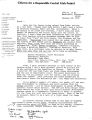
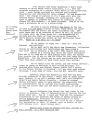
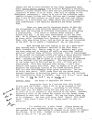
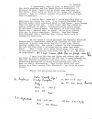
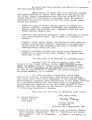
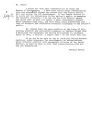
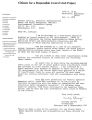
Show 'U-J * on^ lands {jf*3. Breakdown of the Issues, continued ^ rfc" t,^JL - whether the Utes entered into discussion of alternatives to CUP water supply. /^ ^ " U U L^ - whether the Utes entered ihto^discussion of alternatives to Whiterocks Dam. - whether the Utes have discussed with Boyden or anyone else, their intentions for using their water entitlement. - G J ^ M ^ OU<JA 1^^^ ^Hd^ CAZP <U^fcl kjj^f^r*-*- In view of the fact 'that tTie ^Boyden Attorneys-CfcmpaAy -was. ( ,, tha-~©ne~who~ worked with the Indians involved in the Four ~^~^ Corners Power Development, grave questions arise about the motivation of this Law Company in representing the Ute Tribal Council.Steve Boyden solidly supports Utah's development. Another question to be asked is this: are Indian reservation lands independent of existing laws? Is the implementation of the Carter Water Policy and the obligations of EPA under the Clean Water Act applicable to reservation lands? jurisdiction over all wildlife and fisheries bordered "bythe originaT tribal boundaries. This would extend up to the Wyoming border on the north, to the Colorado border on the east and approximately where the present Ute border exists on the south and west, I believe. - I have been told that this proposal originated from Boyden, not from the Utes. - the Utes presently forbid non-Indians access to Ute lands for purposes of fishing and hunting, without a fee permit. Also road access across Ute lands to the Uinta Range is -forb"Idofen. The purpose of wildlife and fisheries control'on^alx'the National Forest and BLM lands would be one of charging for fishing and_ flh hunting. L^arJ^-f^ • T^ ££-C v^elX^ v_/,o^ ^ l y ^ 7T^ w U L - the State Division of Wildlife Resources considers 4LMK -freHEH54J3.i 11 ty-of Ute wildlife and fisheries management X^T to be anr-lflipossIbiifcity\ The Utes cannot^anage the °* streams and wildlife on existing Tribal,lands, The U.S.Fish & Wildlife Service has h^fim¥^^^^^B^±±±ty. - the Forest Service already has enormously complicated issues of wildlife and fisheries management relative to Multiple -Use conflicts: timber production, grazing, and overwhelming recreation demands. It is almost impossible to rfctr±«k what would happen with wildlife habitat I T^jffi^ a n d stream fishery management by the Forest Service CU^] being brought in line with Ute wildlife and fishery ownership. While I understand what might be a valid concern for wildlife and fish protection in the Indian ethic, the present state of professional biological sophistication of the Indians is negligible. At best, wildlife management is in its infancy among white professionals. In addition, the Uinta Range in northeast Utah is going to be a significant and lone public area in that region for most varieties of Rocky Mt. wildlife. Only the grizzly, gray wolf, and wolverine are really gone. A wolverine has been sited recently and I believe I saw one in 1973 in a remote area. Canada lynx numbers cute, down, Rocky Mt. sheep can be re-introduced and cougar is still present. |