| Title |
Spanish speaking peoples in Utah, oral histories: book 1, numbers 1 through 10 |
| Alternative Title |
Jose Medel, Salt Lake City, Utah: an interview by Vincent Mayer, October 9, 1970; Louis Amador, Salt Lake City, Utah: an interview by Vince Mayer, Greg Thompson and Floyd O'Neil, December 3 and 8, 1970; Mrs. Francis Yañez, Salt Lake City, Utah: an interview by Vincent Mayer, May 21, 1971; Señor Santos Cabrerra, Salt Lake City, Utah: an interview by Vincent Mayer, January 4, 1971; Mrs. Ellen Córdova, Salt Lake City, Utah: an interview by Bernice Martínez, June 15, 1973; Mr. Francisco Solario, Salt Lake City, Utah: an interview by Floyd A. O'Neil and Vincent Mayer, December 19, 1970; Jesús and Agapito Castillo, Salt Lake City, Utah: an interview by Vincent Mayer, June 13, 1971 |
| Creator |
Medel, José, 1907- ; Amador, Louis, 1908- ; Yañez, Mrs. Francis, 1886- ; Cabrerra, Santos, 1886- ; Córdova, Ellen, 1904- ; Solario, Francisco, 1910- ; Castillo, Jesús, 1924- ; Castillo, Agapito, 1923- |
| Contributor |
University of Utah. American West Center; Mayer, Vincent, 1944- ; Thompson, Gregory C. (Gregory Coyne), 1943-; O'Neil, Floyd A.; Martínez, Bernice |
| Publisher |
Digitized by J. Willard Marriott Library, University of Utah |
| Date |
1970-10-09; 1970-12-03; 1970-12-08; 1970-12-19; 1971-01-04; 1971-05-21; 1971-06-13; 1973-06-15 |
| Date Digital |
2015-01-15 |
| Spatial Coverage |
Salt Lake City, Salt Lake County, Utah, United States, http://sws.geonames.org/5780993/ |
| Subject |
Mexican Americans--Utah--History; Mexican Americans--Utah--Biography; Mexican Americans--Utah--Social conditions; Chicano movement--Utah |
| Keywords |
Migrant workers; Farm labor; Railroad workers; Mexican Americans; Mexican Revolution; Labor movement; Catholic Church; Guadalupe Mission; Miners; Utah Copper; Chicano; Mexican Civic Center; Mexican consuls; Discrimination; Mexican immigrants |
| Description |
Transcript of interviews held in 1970, 1971 and 1973 at Salt Lake City with various Hispanic residents of Utah: Jose Medel (b. 1907), Lous Amador (b. 1908); Mrs. Francis Yañez (b. 1886); Santos Cabrerra (b. 1886); Mrs. Ellen Córdova (b. 1904); Francisco Solario (b. 1910); ; Jesús and Agapito Castillo (b. 1923 and 1924). From: Spanish Speaking Peoples in Utah, oral histories, Interviews no. 1 - 7, 8 - 10 |
| Type |
Text |
| Genre |
oral histories (literary works) |
| Format |
application/pdf |
| Language |
eng; spa |
| Rights |
 |
| Relation |
For description of each interview, see: http://nwda.orbiscascade.org/ark:/80444/xv23580 |
| Scanning Technician |
Matt Wilkinson |
| Conversion Specifications |
Original scanned with Kirtas 2400 and saved as 400 ppi uncompressed TIFF. PDF generated by Adobe Acrobat Pro 10 for CONTENTdm display |
| ARK |
ark:/87278/s6mw46tt |
| Topic |
Mexican Americans--Biography; Mexican Americans--Social conditions; Chicano movement |
| Setname |
uum_sspu |
| ID |
1038425 |
| Reference URL |
https://collections.lib.utah.edu/ark:/87278/s6mw46tt |
| Title |
Page 179 |
| Format |
application/pdf |
| Setname |
uum_sspu |
| ID |
1038272 |
| OCR Text |
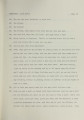
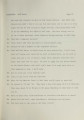
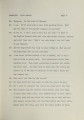
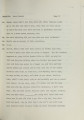
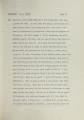
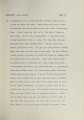
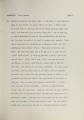
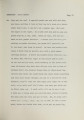
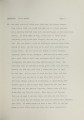
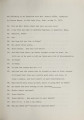
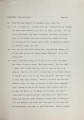
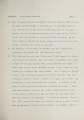
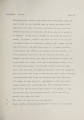
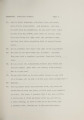
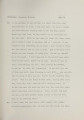
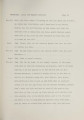
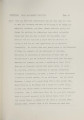
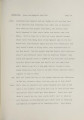
Show INTERVIEW: Senor Santos Cabrerra Page 10 SC: will return to the capitol. The soldier then said, the party returned to Nexico City with the money, but they still killed Carranza. How could they let the country to be robbed and remain with nothing. Yes, it was his own son-in-law who killed him. And then they returned to the capitol the next day with all the money and the body. Yes, it was his own---it was his own son-in-law. He was a real clever fellow. He also killed another revolutionary who was in the south, Emilio Zapata. He also killed him. Now this is what they tell us and we read in the newspaper. That man who had been a soldier told me about this. His name, the soldier, was Bustillos. He told me, this is the way it happened. Carranza's own son-in-law killed Carranza. They all returned to the capitol----returned all the money, even the chairs, and everything was left right. But only those who were in the revolution as officers, as generals, can give a good account of what happened, or the soldiers who lived, or are living. But we only knew what they told us. One who cannot see or was not there, can't really speak of what happened. Where is Jose Medel? VM: He still lives in Woods Cross . . SC: I thought you said he lived in Salt Lake. I also knew him before he got married . He was really a strong man-- --really strong. VM : Mr. Cabrerra, when you lived here earlier, what things did you do for recreation diversion---dances, tell me, what did you do? |
| Reference URL |
https://collections.lib.utah.edu/ark:/87278/s6mw46tt/1038272 |