| OCR Text |
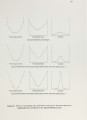
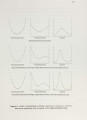
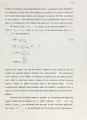
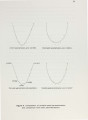
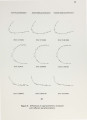
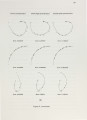
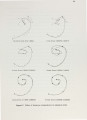
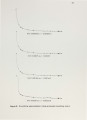
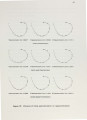
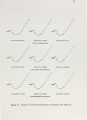
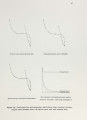
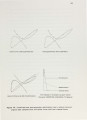
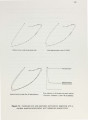
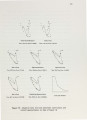
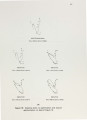
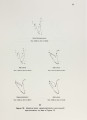
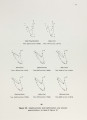
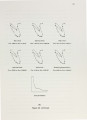
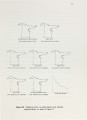
Show 74 reparametrization and knot optimization is evidently more powerful than reparametrization alone, and is likely to have many uses as well. At this point, it interesting to compare the approximations to the data of Figure 17. Figure 21 shows the results of approximation using both types of optimization, while Figure 22 shows the results without optimization. Note that the optimization does not make much difference in the number of knots required to produce an approximation with the specified error (four additional knots versus five). But the corner selection process, which places knots of multiplicity k-1 into the initial knot vector to force corners to appear in the final order k approximation, has already placed the majority of the knots, so a few cycles of optimization cannot be expected to make a great deal of difference in the few knots that remain to be selected. Also, as noted by Jupp, the multiple knots tend to remain together, even when the knots are optimized [141, so that the number of "free" knots is actually much smaller than in the problem without corners, so that less error reduction is likely to result from variable knots. The knots which are selected by corner placement are very important, however. This is evident in both Figure 21 and Figure 22, as the initial approximation already has a shape which is quite close to that apparent in the data. Also, the multiple knots need not be varied in the knot optimization problem, since they are presumably already appropriately positioned to represent the corners in the data. Since there are fewer variable knots, the complexity of the variable knot problem is reduced. Some conclusions about these final methods can be drawn from the results which have been shown. First, the importance of the initial parametrization in the shape and error or compactness of the final approximation cannot be stressed enough; the best optimization techniques can only hope to find local minima. Reparametrization is very useful as an optimization technique, as it is effective both alone and in combination with adaptive knots or knot optimization, under the restrictions that were discussed, and is not very timeconsuming. Knot optimization, when combined with reparametrization, is a |