| OCR Text |
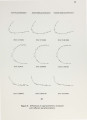
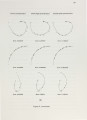
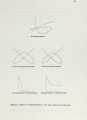
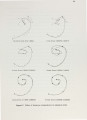
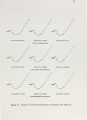
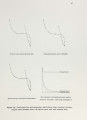
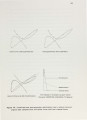
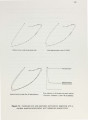
Show 7 In his work on interpolating a small number of data points with aesthetically pleasing curves, Manning [ 1 6] observes that a uniform parametrization is inappropriate for unequally spaced data points, and that a chord length parametrization is unsatisfactory if any segment of the curve turns through a large angle between data points. Similar effects can be seen in approximation (see examples in section 2.1 ). Manning notes that the behavior of the curve between the data points can be as important as its behavior near them. By fitting a continuous representation to a discrete set of data, we are effectively filling in "missing information" about what is happening between data points. In 1970, Grossman proposed a method for parametrizing a set of raw data for least squares fit with a single parametric polynomial. Initially, the data set is given a chord length parametrization, and a nonlinear method is used to minimize the least squares error with respect to the parameter values. Plass and Stone use a similar approach, extended to geometrically C 1 piecewise parametric cubics, which finds minima by Newton-Raphson iteration [19]. Although good results can be achieved, the method may not always converge in a reasonable number of iterations [19]. Other than these methods, little research has been done either in parameter estimation or in the understanding of the effects of the parametrization on the parametric approximation produced. Manning [16] has examined the effect of the parametrization on interpolation, and although his work is not directly applicable, its relevance will be discussed in section 2.1. The work of Plass and Stone is interesting, combining both parametrization and knot placement into one method. Although the representation they use is only C1, an approach which applies reparametrization to B-splines will be discussed in section 2.2. Later, these methods will be combined with knot selection techniques, and the results examined. |