| OCR Text |
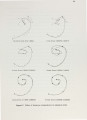
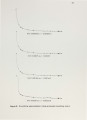
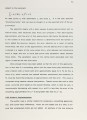
Show 35 2.2.4 Convergence Reparametrization uses a fairly simple model, which does not requ ire derivatives. Compared to nonlinear methods which employ more complicated models, reparametrization does not converge rapidly. Its convergence speed can be compared to that of the early variable knot algorithm of de Boor and Rice [4], which uses a discrete Newton iteration, repositioning each knot in-dependently of the others; and which as a discrete Newton's method, can be expected to be linearly convergent near the solution. The L2 error of the approximation ek for each iteration k, k=O, 1 ,2,... is said to converge q-linearly to e"' if a c 1 [0, 1) exists, such that llek+l -e,..ll ~ c llek -e"'ll. It does appear that the constant c for reparametrization by this method is rather large, - .9, which means that convergence is quite slow. One could expect better convergence (q-superlinear) near the solution if a continuous Newton's method were used; however, the solution of a nxn linear system for each iteration, where n is the number of data points, may not be feasible, particularly for very large sets of datapoints. Note that the first few iterations of reparametrization can reduce the error significantly. For the most intuitive results, the approximation used should have an ap-propriate number of degrees of freedom. If the approximation has too many degrees of freedom, the approximation may essentially interpolate the data. Reparametrization is rather futile in such a case, since the parametric value t of the closest point on the interpolating curve to the point c. is probably very I close to the parameter of the data point, so no great changes are likely. If too few degrees of freedom are available, reparametrization will reduce the error, but the shape of the resulting curve is unpredictable. When an appropriate number of degrees of freedom are available, and the initial parametrization is good enough that the initial approximation has roughly the same overall shape as the underlying function, both error reduction and improvements in the shape of the approximating curve can be expected. Both types of improvement are essential to solving the design approximation problem. |