| OCR Text |
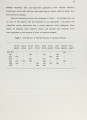
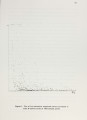
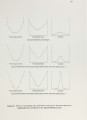
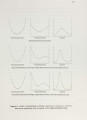
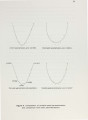
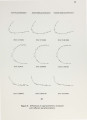
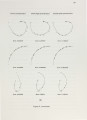
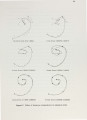
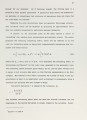
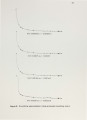
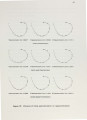
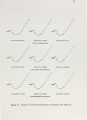
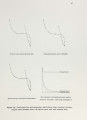
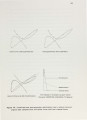
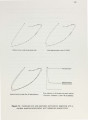
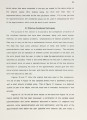
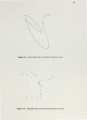
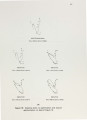
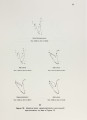
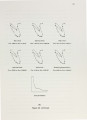
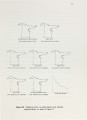
Show 59 The third example, in Figure 14, is a more difficult problem, in which the original parametrization and knot vector are unknown. This is more repre sentative of the type of problem that will need to be solved to apply approximation to design problems. A small amount of noise was added to the data: the error of the generating curve as an approximation to these data points would be 0.0055688. The variable speed parametrization discussed in section 2.1 was used as an initial parametrization, and then three adaptive knots were added, using true distance calculations, as discussed in section 2.3. The final error reductions from each method still have essentially the same relationship, but there is an essential difference here: the error reduction by any of the methods becomes insignificant after approximately ten iterations, which suggests that that might be a good number of optimizations to perform if error reduction is desired. This is a reasonable tactic, since the convergence of this method to a global minimum may not be very fast. By solving one problem and then the other, we are using two different reduced models. As discussed earlier, the reduced model tends to result in more conservative steps, and thus requires more iterations before convergence. But the error reduction possible in only a few iterations is quite significant. Based on all of the results, since reparametrization alone seems to perform almost as well as alternating between knot optimization and reparametrization, and knot optimization alone does not perform well, perhaps the data should be reparametrized more than once for each knot optimization. This seems appropriate, since reparametrization does not converge as quickly as knot optimization, and also since one cycle of reparametrization is much faster than a single knot optimization cycle (in terms of complexity, reparametrization is O(m log m), where m is the number of datapoints, while the variable knot |