| OCR Text |
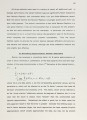
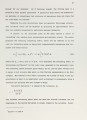
Show 41 enough for our purposes. As it becomes smaller, the limiting case is a parametric least squares polynomial. A polynomial does satisfy the mathematical definition of smoothness, but continuity of derivatives does not imply that the curve does not undulate. Reducing the jump discontinuity does not generally discourage unneces-sary curvature, which can be essential to producing an approximation which does not undulate unnecessarily, particularly between datapoints. In section 1 .2, we discussed some of the ideas behind a notion of "smoothing" that satisfies both mathematical and aesthetic criteria. The author proposes the following smoothing metric, which will be referred to as the modified smoothing spline, as being both computationally inexpensive and con-sistent with these notions: n tn p I ( wi II f(ti)- ci 112 ) + (1-p) f II f"(t) 112 dt, i= 1 t, (2.5) where the ci, ti and p are as in (2.4). This resembles the smoothing metric of Schoenberg and Reinsch" for the cubic case, extended to the parametric case. The smoothing spline produces good results, but its use has been limited since it places a knot at every data point, so that the final representation is far from compact. But nothing in this metric constrains the number of knots in the ap-proximation, at least in our application; such a constraint is unnecessary, since a minimum can be found with any number of knots. The second derivative f" is related to the curvature " by II f' X f" II II t' 11 3 The modified smoothing spline does not have the minimal curvature, but the magnitude of the second derivative is closely related to the curvature. Essen- * Equation ( 1.1 ), page 8. |