| OCR Text |
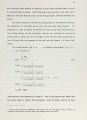
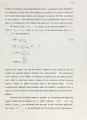
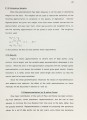
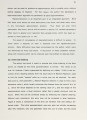
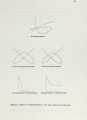
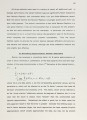
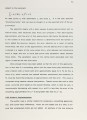
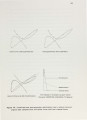
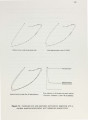
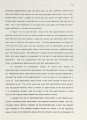
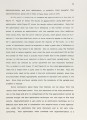
Show 23 are somewhat more difficult to interpret, as they might indicate either a corner or localized high curvature. In the following, these heuristics have been translated into formulae that are used to scale the parametric intervals between data points. The initial parametric intervals are proportional to the distances between the projections of the data points onto the first-order approximation. The projection is used to reduce the effects of noise on the final parametrization. The scaling factors for the parametric intervals are computed by estimating scaling factors based both on the angles ; . that the first-order approximation I turns through from one segment to the next, and the lengths ~ . of those segJ ments. The scaling factors Fi(l), i = 0, ... , n+1 based on the angles li = ;i I 21 i = 1 I • •• I n are computed by n I Fi{l) i=1 Fa{l) = --n F1 (I) = ---------- 1 + (1-cr) COS 11 + cr COS 12 1 F.(l) = ---------- 1 1 + (1-cr) COS li + cr COS li_1 + , i = 2, . . . , n-1, + (1-cr) COS li + cr COS li+1 1 F (I) = ---------- " 1 + (1-cr) COS In + cr COS I n-1 (2.2) which derives from equation (2.1), page 17. Half of the angle turned, rather than the whole angle, is used in the calculations, since the angles tend to be more * Angle scaling factors are needed at the ends as well, but the angle turned is difficult to estimate at the ends, so the factor used is the average of all of the others. |