| OCR Text |
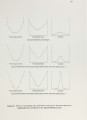
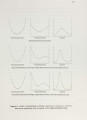
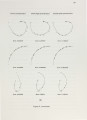
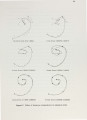
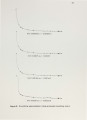
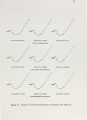
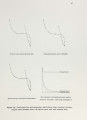
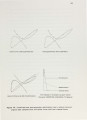
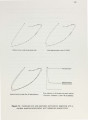
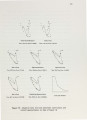
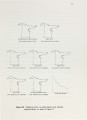
Show 65 dered values that were computed in the test are scaled to the same range as the original values (this scaling being the third and final step of reparametrization), and used as the new parameter values. If it is not yet time for reparametrization, the unordered values can be used in computing the error of the approximation, which must be done in each iteration. 3.7 Effective Combined Techniques The purpose of this section is to provide a fair comparison of several of the combined methods that have been discussed, along with some simpler methods, on some realistic problems. Characteristics of realistic problems are: Data may or may not be from a mathematical function, which may have corners. The data may have some unknown amount of noise, and neither a good parametrization, knot vector, or a suitable error bound is known. The methods used require only an indication of whether corners are present in the data, and the error bound, from the user, in order to make the approximation process as automatic as possible. There is still some difficulty for the user in selecting the error bound, since no value is typically known; but the use of the true distance estimates in computing the error of the approximation should give the error more intuitive meaning to the user, and make the results obtained more consistent from data set to data set. Figures 16 and 17 show the original data sets used in this comparison. The set of data in Figure 16 was sampled directly from a parametric 8-spline, with a small amount of added noise. That of Figure 17, however, is a digitized outline of part of an object, with the noise that is inevitably introduced in that process. Figures 15, 18, 19, and 20 show results, on the data from Figure 16, of the hybrid method that has been discussed: a combination of the variable speed parametrization and corner detection discussed in section 2.1, adaptive knot selection, some reparametrization and knot optimization, until the error of the approximation falls below the user specified error (section 3.6), and finally a |