| OCR Text |
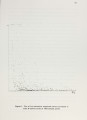
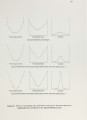
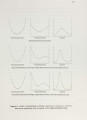
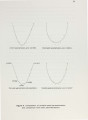
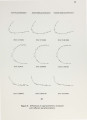
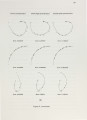
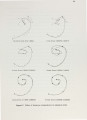
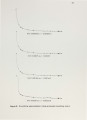
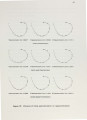
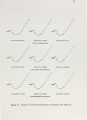
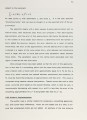
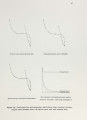
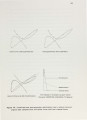
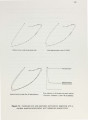
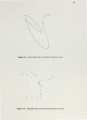
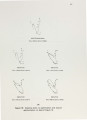
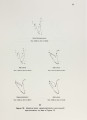
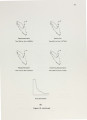
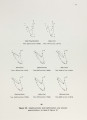
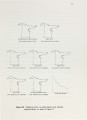
Show 19 when large curvature would result in the best fit, and lengthening them where low curvature is more appropriate. Two questions arise: how to control the lengths of the first derivatives in the approximation, and how to estimate the curvature of the underlying smooth curve. 2.1.3.1 Controlling derivative length. Controlling the derivative lengths is simple for Manning, since he interpolates the data, using a single cubic segment between each pair of data points, which has exactly four degrees of freedom. Thus tangent lengths can be specified directly. In approximation, a fairly reliable way of changing tangent lengths is to modify the parametrization. The dif-terence of the values of the parameter t associated with two consecutive data points will be referred to as the parametric interval between those two points. Increasing one such parametric interval with respect to the others"' reduces the length of the first derivative of the approximating curve near those parameter values, permitting higher curvature, which is important if the curve turns through a large angle. Making an interval smaller increases the first derivative, and tends to flatten the curve. The effect of changing the relative size of a single parametric interval on the resulting least squares approximation is demonstrated in Figures 2 and 3 .. 2.1.3.2 Heuristics for estimating desired curvature. To use the control provided by varying the parametric intervals, we must be able to generate a scaling factor for each of the parametric intervals, based on the estimated curvature of the underlying curve. We estimate these scaling factors by using a first-order approximation and heuristics to pinpoint potential regions of low and high curvature. The algorithm used to generate the first-order approximation is outlined here for completeness. One parameter MinPts is required, representing the minimum number of points expected to be approximated by a single line. In- * Only relative changes affect the approximation. If all parametric intervals are scaled by the same amount, the approximating curve is unchanged. |