| OCR Text |
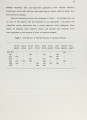
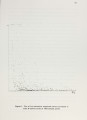
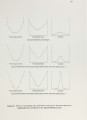
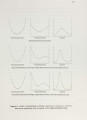
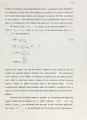
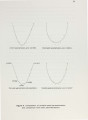
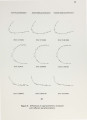
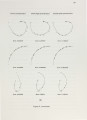
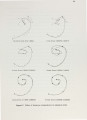
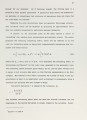
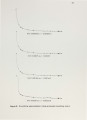
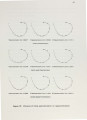
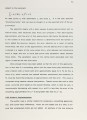
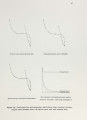
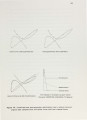
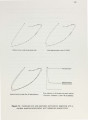
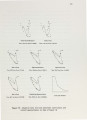
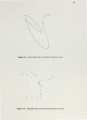
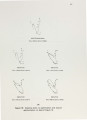
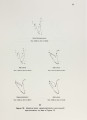
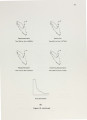
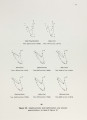
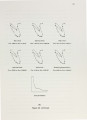
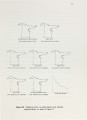
Show 28 2.1.5 Estimating Weights Once the parametrization has been obtained, it can be used in estimating weights for the data. The weights can be used to reduce the sensitivity of the resulting approximation to variations in the density of digitization. Densely digitized points are given less weight, since their sheer number insures that the approximation will pass near them, while sparse points are weighted more, so that the resulting approximation will be pulled in close to both. The weighting function used, w0 = t1 - t0 ti+1 - ti-1 wi = 2 , i = 1, . . . , m-1 w = t - t m m m-1 is discussed by de Boor [3] and satisfies these requirements. 2.1.6 Results Figure 5 shows approximations to several sets of data points, using uniform, chord length, and the variable speed parametrization developed in this section. While the error of the approximation computed with the variable speed parametrization is not always the smallest, it usually gives good results. Equally important, it is rarely worse than both chord length and uniform, so that the results tend to be more consistent. Since the initial parametrization influences the results of reparametrization and adaptive knot selection, the effect of the initial parametrization on these methods will be discussed in sections 3.1 and 3.2. 2.2 Reparametrization for a-spline Curves One major contribution of the work of Plass and Stone has been combin-ing knot selection, corner placement, reparametrization, and the use of least squares to minimize the true distance from the curve to the data, rather than the pseudo-distance. Reparametrization, a method of computing new parameter values for a set of data points, can be very useful, since these new parameter |