| OCR Text |
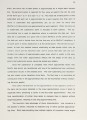
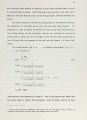
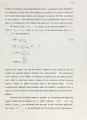
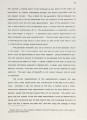
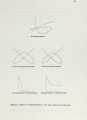
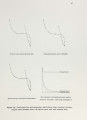
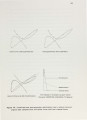
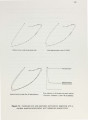
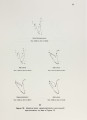
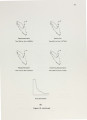
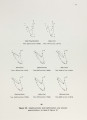
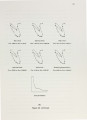
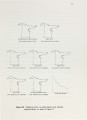
Show 27 two points as the corner. The first-order approximation could be made by con necting these corners. This would probably not degrade the results, since th is method is an approximate method anyway. If the reader appreciates the scarcity of literature about the effects of parametrization on the shape of an ap-proximation, as well as on what can be done with such information, perhaps the roughness of the algorithm will be understood. 2.1.4 Corner Detection Sharp corners in the first-order approximation might represent either ac-tual corners in the data, or a small region of high-curvature; thus, they are dif-ficult to classify in all cases without some arbitrary decisions. Unfortunately, there are always borderline cases, which could be a corner in the data or not. This is not necessarily a problem inherent in the approach, however, as some cases must also be ambiguous to the human eye. The solution adopted re-quires the user to indicate whether corners are allowed in the resulting approximation, and then, if corners are allowed, to assume a corner if the angle between the two approximating lines is less than 135 degrees, as suggested by Plass and Stone [1 9]. In the author's implementation, the corner detection routine returns a knot vector. If the corner detection flag is false, or no corners are found, the knot vector contains only the initial and final k-fold knots, otherwise the knot vector returned also contains knots of multiplicity (k-1), at the parameter value on the curve where a corner is desired. This vector is' then used as the initial knot vector, to which adaptive knots can be added by other modules. A least squares approximation of order k is only C0 at the multiple knot(s), which per- mits a corner to appear. * * This is also true for smoothing splines, as discussed in section 3.3.4. |