| OCR Text |
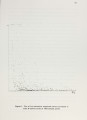
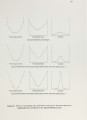
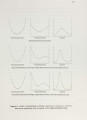
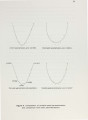
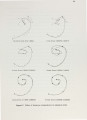
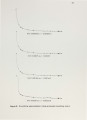
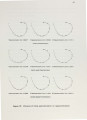
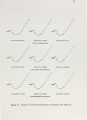
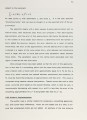
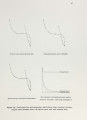
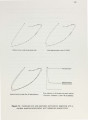
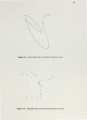
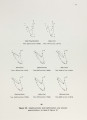
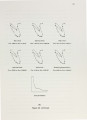
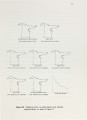
Show 37 maximum distance from the approximating curve, perhaps followed by some minimal optimization of the knots [4]. Experiments with a method which adaptively places one knot at a time at the central data point, by the former criterion, suggest that using the L2 error based on the true distance consistently results in the selection of either the same or better knots. An example is shown in Figure 7, with the data parametrized by chord length, although worse parametrizations show more dramatic results. In general use, this version of adaptive knots seems quite versatile and robust despite its simplicity and speed. 2.3.2 Properties of True Distance Use of the true distance in other areas has some intriguing implications. When using a smoothing spline, e.g., the proposed smoothing spline, it is no longer true that the error of the approximation increases monotonically as the amount of smoothing increases. Thus, two approximations, each produced by minimizing the same smoothing metric, but with a different balance between smoothness and minimization of the pseudo-distance, may in fact have the same error. Presumably, in such a case, the better approximation would in fact be the smoother one, while previously the other might have been chosen. The loss of monotonicity, further complicated by the possible existence of discontinuities in the true distance as computed by a nonlinear local method, can present problems, since the existence of a smoothing approximation with a given error is no longer assured; but this requirement is more a mathematical ideal than a requirement for finding a suitable solution, and a smoothing approximation with error near that specified can still be found.* This seems to be a promising area, which can not be given the attention it deserves here. * A method for finding such an approximation is discussed in section 3.3.3, on page 53. |