| OCR Text |
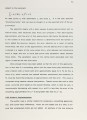
Show 54 smoothing spline of order ~ corners will be preserved and the rest of the curve will be smoothed. 3.4 Adaptive Knot Placement and Optimization A technique of selecting a knot set by adding variable knots is discussed by de Boor and Rice [4]. The knots are added either in the region where the sum of squared error is the greatest, or at the data point which is the greatest distance from the approximation. They are called variable knots, because after they are added, the knots are varied in a way that tends to reduce the leastsquare error of the approximation. By performing this optimization, a nearoptimal knot vector can be found using a relatively simple knot selection heuristic. Fewer optimization cycles are performed for the first few knots than for the last ones; it would be excessive to perform a full optimization after adding each knot, since it is no longer optimal when another knot is added. De Boor and Rice experimented with this method, and obtained good results. A similar notion of adaptive variable knots is used by the author. The variable knot algorithm developed by Golub and Pereyra [1 1] is used for knot optimization, since it converges faster than the method de Boor and Rice use."' 3.5 Combined Optimization of Knots and Parameters Given that we have methods for minimizing the error of an approximation, both with respect to the knots, and the parameter values associated with the data points, a combined method offers great promise. The reparametrization discussed in section 2.2, and knot minimization as outlined by Golub and Pereyra [ 1 11 will be used for this study. Variable knots can be expressed as a nonlinear minimization problem, and thus can be solved in a variety of ways. Minimizing the error of a least squares B-spline approximation as a function of the knots is nonlinear with respect to • The author's use of Golub end Pereyra's variable knots is discussed in greater detail in section 3.5 |