| OCR Text |
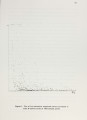
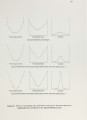
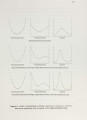
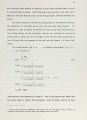
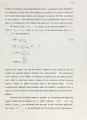
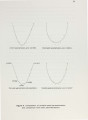
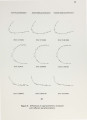
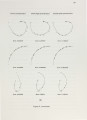
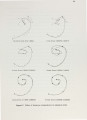
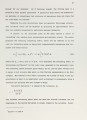
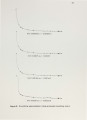
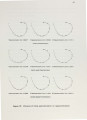
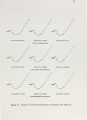
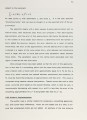
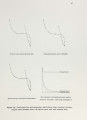
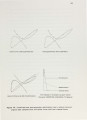
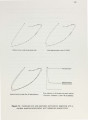
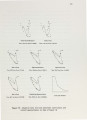
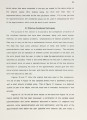
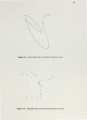
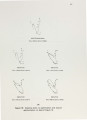
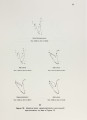
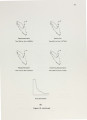
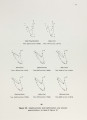
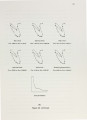
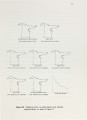
Show 50 adaptive knot placement works very poorly. The result, after eight adaptive knots have been added, still has a larger error than an approximation with only four internal knots, using the variable speed parametrization. Also, since more knots are used, the approximation is already beginning to undulate, although a close fit has not yet been achieved. The approximation using the variable speed parametrization with adaptive knots also has a smaller error than the com-parable approximation using a chord length parametrization, although the dif-ference is less pronounced. When a good parametrization, e.g., the variable speed parametrization, is used, a large localized error in the approximation seems more likely to be alleviated by adding a knot there, making adaptive knot selection a more effective technique. 3.3 Adaptive Knots and Smoothing Approximation 3.3.1 The Nature of Smoothing Approximation While a smooth approximation is clearly desirable for design applications, there are many paths one might take to find such an approximation. Some, such as de Boor and Rice [4], achieve smoothness by ensuring that the approximation has close to the minimal number of knots, while Dierckx [6] stresses smoothing the final result, which may have more knots than necessary. The latter approach will be discussed in this section. One clear advantage is that if the "smoothness" of the approximation is not lost by having too many knots, then it is less important to find near-optimal knots. Optimization of knot locations, as discussed in section 3.5, can be very effective, but clearly has the greatest computational complexity of all of the methods the author has used. 3.3.2 The Approach Taken by Dierckx As a smoothing approximation, Dierckx proposes the parametric B-spline approximation f that minimizes |