| OCR Text |
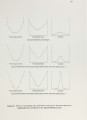
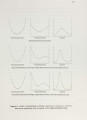
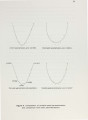
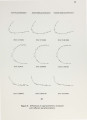
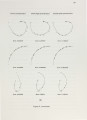
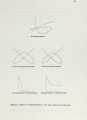
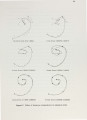
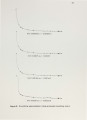
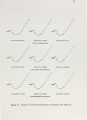
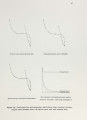
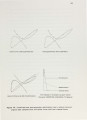
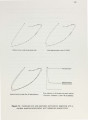
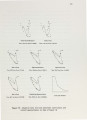
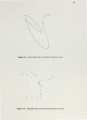
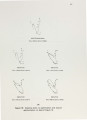
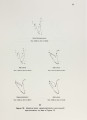
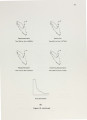
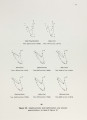
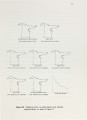
Show 62 has very few degrees of freedom, it cannot be influenced very greatly by any individual data point. The effects of reparametrization are greatest at this point, since the parameter value of the point on the approximating curve nearest a data point can be very different from the parameter value associated with that data point. This can be either good or bad. A large change in the parameters can pull a curve into shape very nicely where fit is poor simply because the parameters are less than optimal, as in Figure 6, if enough degrees of freedom are available to approximate the general shape of the data. If the shape of the curve will change greatly in upcoming steps, however, there is no reason to believe that reparametrizing at this stage will reduce the error of later approximations. Furthermore, since parameters change less and less in reparametrization as knots are added, flaws in the parametrization which are introduced now may take a long time to resolve later. The net result is that reparametrization should be done as soon as enough knots have been added that the approximation has roughly the same shape as the data. Deciding when the approximation is close enough to begin reparametrizing is an interesting problem. An example of the sequence of events involved in the combined adaptive-knot and optimization process can be found in Figure 15. The original curve, a cubic B-spline with three internal knots, and the data that was sampled from it (with some added noise), are shown in Figure 16. The initial approximation, with no internal knots, and an initial variable-speed parametrization, can be seen in the first frame of Figure 15. The initial approximation does not have the same shape as the original curve; this is no surprise, since it only has four degrees of freedom. The x-component of the original curve has four extrema; to represent such a shape, the approximating curve must have at least six degrees of freedom. The third frame shows the result after two knots have been added; it does in fact "look" much more like the data than the previous approximations, and this is reflected in the error. At this point, reparametrization has great potential both to reduce the error, and to improve the shape of the approximation. |