| OCR Text |
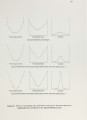
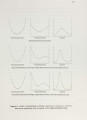
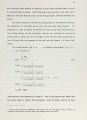
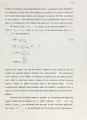
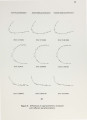
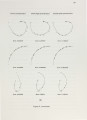
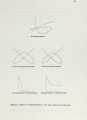
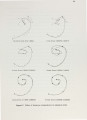
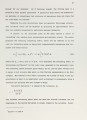
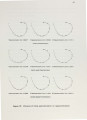
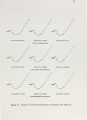
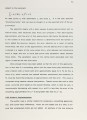
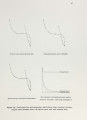
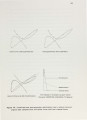
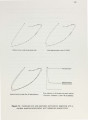
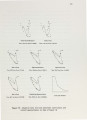
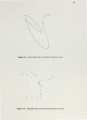
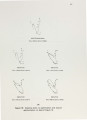
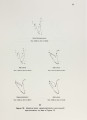
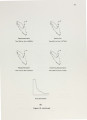
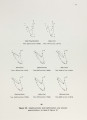
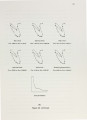
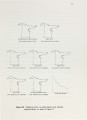
Show 16 2.1.1 Limitations of Common Parameter Estimators Chord length is commonly used for parameter estimation, since it is much more robust for general approximation problems than simpler estimators, e.g., uniform. It is not, however, adequate in many cases, particularly when the underlying curve varies greatly in curvature. It seems useful, therefore, to explore the reasons behind this, and develop a related estimator which adapts to varying curvature. Approximations were made, using various parametrizations for unevenly spaced data generated from known parametric cubics. Approximations made with a chord length parametrization seldom attained the extremes of curvature present in the generating curves, and thus were not close to the data. Historically, chord length parametrizations have been used because they serve as crude estimates of the arc length of the approximating curve between each of the points approximated. One consequence is that the magnitude of the first derivative of the approximating curve does not seem to vary as greatly, on the average, as that of a general B-spline curve. We might reasonably ask whether thus constraining the first derivative reduces the likelihood that a good fit will be found; there is evidence that it does. 2.1.2 Effects of Tangent Magnitude on Shape of Curve In a related area, Manning [16] has studied the effects of tangent lengths on the shape of an interpolating curve. When an interpolating curve is constrained to turn through a certain angle between two interpolation points, the tangent lengths at those two points affect the shape of the curve. Small tangent lengths tend to flatten the curve between those two points, while large tangents may produce unnecessary loops. Intermediate values, which depend on the angle turned, result in pleasing curves. Magnitudes IIP'II for the end tangents of the interpolating curve at consecutive data points a and b are estimated by: |