| OCR Text |
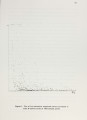
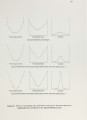
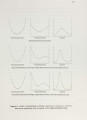
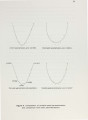
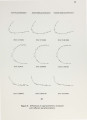
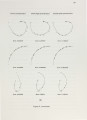
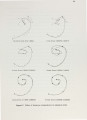
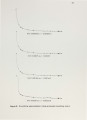
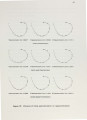
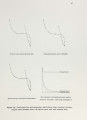
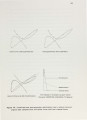
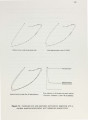
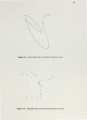
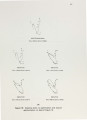
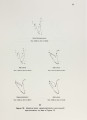
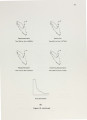
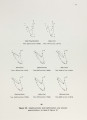
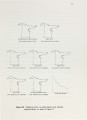
Show 25 This permits a scaling factor to be computed at any point on the linear approximation, by linearly interpolating between the factors associated with the two nearest corners. Thus a factor for the parametric interval between two neighboring points can be determined from the locations of the projections of those points onto the first-order approximation. Each of the parametric intervals is then scaled by the corresponding factor, to obtain the final parametrization, which is normalized to [0, 1]. This parametrization is compared to uniform and chord length in Figure 4. A parametric least squares approximation has been computed using each parametrization. The first-order approximation used in estimating the scale factors is also shown, as well as the scale factors used in computing the variable speed parametrization. The parameter FewestPts was set to three for all of the examples shown in this paper. This is the smallest value that can be used, since at least two points must be approximated by each linear segment. Using FewestPts=3 per-mits the maximum amount of information to be extracted from the data, while still reducing the effects of noise. It seems suitable for the level of noise and redundant information expected in digitized data. A larger value might be more effective, however, if the data were more dense, such as that obtained by edge detection. The exact value of FewestPts is not crucial, however, only its order of magnitude. The current implementation of this parametrization projects the data points onto a least square plane, thus converting all of the data to two dimensions. Although it was not obvious at the time, a method using a three-dimensional piecewise linear approximation would not be more difficult to im-plement, except that the least square lines will not intersect. The author suggests that the corners of the first-order approximation could be determined by taking each consecutive pair of least square lines, and computing the point on each line that is nearest the other line,* and then using the average of these •Parallel lines are a nasty exception, although including the subdivision point in both data subsets does make this less likely. |