| OCR Text |
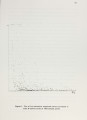
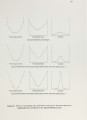
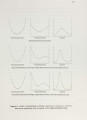
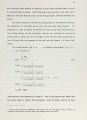
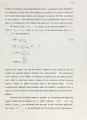
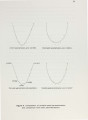
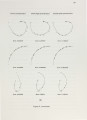
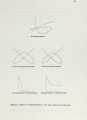
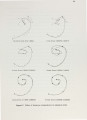
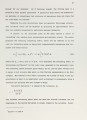
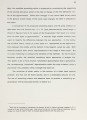
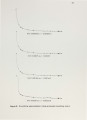
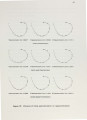
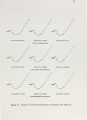
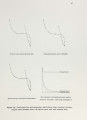
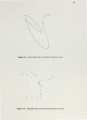
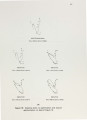
Show 31 values can be used to produce an approximation with a smaller error without adding degrees of freedom. For this reason, the author has developed a reparametrization algorithm for parametric B-spline approximations. Reparametrization is an important part of an integrated approach. Note that there must always be more data points than knots, and often many more, in any nonsingular approximation problem. Thus there are also more parameters than knots, and as will be shown in section 3.5, variable parameters often result in greater error reduction than variable knots, which has been explored by many authors [4, 11, 14]. The speed of convergence of reparametrization is difficult to assess. To some extent, it depends on what is expected from the reparametrization process. Many difficulties have been encountered by the author, which were not mentioned by Plass and Stone. A discussion of these problems follows, along with structure which can be imposed upon the problem to alleviate them. 2.2.1 Enforced Ordering The author has found it useful to assume that initial ordering of the data points, as implied by the initial parametrization, is correct. This tends to be true, for instance, if data is generated by digitizing on a tablet. If this is not assumed, errors resulting directly from the local nature of Newton-Raphson, used to find the locally ·nearest" point on a curve, may not be resolved. For each data point ci with parameter ti, Newton-Raphson iteration is used to find a new parameter value ti which locally minimizes the distance from the curve f at ti to ci. Since the result depends on the starting value of ti, and the shape of the approximating curve, a local minimum rather than a global minimum may be found. Often, this can be corrected simply by enforcing the original ordering. Without such constraints, this error may not be corrected in later iterations. Figure 6 shows a comparison of the error per iteration with and without enforced order. The initial parametrization was very poor but strictly increasing; after fifty iterations, only one parameter value was out of order, but this alone |