| OCR Text |
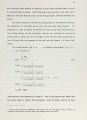
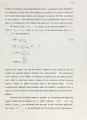
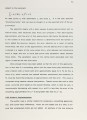
Show 24 severe in a piecewise linear approximation than in a piecewise linear interpolant. It is important to note that if the angle I is classified as a corner it should be set to zero before these factors are computed, to indicate that this is a region of low curvature. The resulting 8-spline will be geometrically linear on both sides of a multiple knot, so it makes little sense to try to induce high curvature. The factors Fi(a), j = 0, ... , n+1, based on the adjusted lengths 6i = >.i + max( .5 - fi_ 1, 0 ) >.i_1 + max( .5 - lj, 0 ) >.i+1 of the approximating lines >.i, j = 1, ... , n+ 1, are computed by , F.(6) = , j=1, ... , n, J 6 i + a j+l + ~A a , Fn+1(5) = 2 5 n+l + IA6 n+l I 5. j=1 J where IA5 = -- . n + 1 (2.3) Because line lengths can still be small in regions of low curvature, the line lengths are adjusted before computing the scaling factors. The adjustment, which depends on the lengths of neighboring segments and the angle between them, tends to make lines longer in regions of low curvature, without changing those in regions of higher curvature, which is the desired effect. A more straightforward approach was originally used, that tended to recombine lines in regions of low curvature, but this made the corner detection process more am-biguous. The final set of scaling factors is obtained by multiplying the angle and length scaling factors together, i.e., F. = F.(f)) = F.(f) F.(a) , i = 0, ... , n+1 . The I I I I factors F 0 and F n+l are associated with the ends of the first-order approximation, and F., i = 1, ... , n, are associated with the corners of the approximation. I |