| OCR Text |
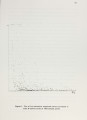
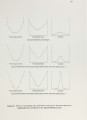
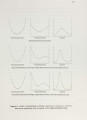
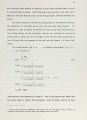
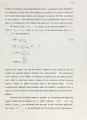
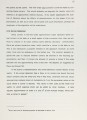
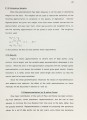
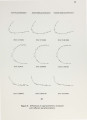
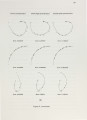
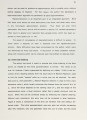
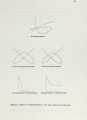
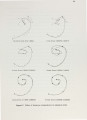
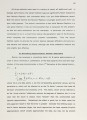
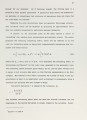
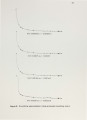
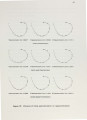
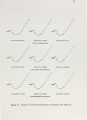
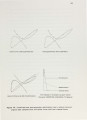
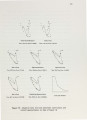
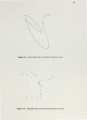
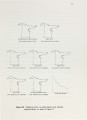
Show 17 liP 'II a = 2 W I [ 1 + • cos lb + ( 1 - • ) cos 1a ], II P b 'II = 2 W I [ 1 + Cl C 0 S I a + ( 1 - Cl ) C 0 S I b ], (2.1) where I 8 is the angle between the tangent direction at point a and the line L between points a and b, lb is the angle between the tangent direction at b and the line L, and W is the length of L. By using tangent magnitudes based on the angle turned by the interpolant between consecutive data points, Manning produces an aesthetically pleasing curve. The study shown in Figure 1, demonstrates an observed relationship between the first derivative length and curvature, for a variety of B-spline curves,* i.e., that at a given point f(ti), either the first derivative magnitude or the curvature may be relatively large, compared to that of any other point on the curve, but it is quite uncommon for both to be large. The first derivative f' is related to the curvature " by II f' X f" II I( = II f' 113 It would be difficult to prove an inverse relationship from this formula alone, since the curvature also depends on the second derivative, which depends on the first derivative. But the observed relationship is certainly consistent with this formula. 2.1.3 How to Build a Better Parametrization All of this seems to imply that if an approximation were used in which the first derivative lengths varied appropriately based on the curvature of the un-derlying curve, that the approximation would have a better shape, and approximate the data more accurately. This could be done by shortening tangents * Using random numbers uniformly distributed over (0, 11. the knot vectors and control points for twenty cubic 8-splines with four internal knots were randomly generated. Each of these was then sampled at fifty randomly selected parametric values. For purposes of comparison, the f irst derivative length and curvature for each data point within a curve were scaled to (0, ll so that all samples would fall within the unit square. |