| OCR Text |
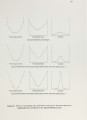
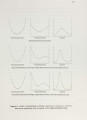
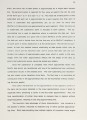
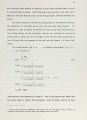
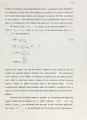
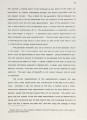
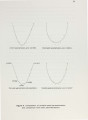
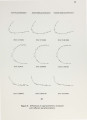
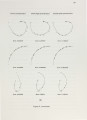
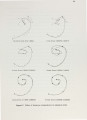
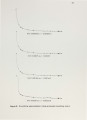
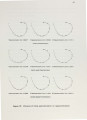
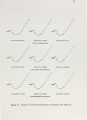
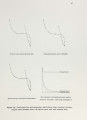
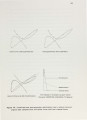
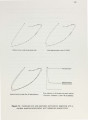
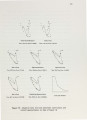
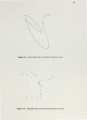
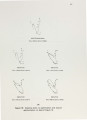
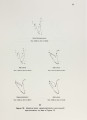
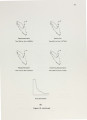
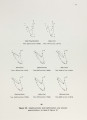
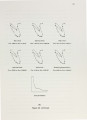
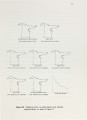
Show 73 smoothing approximation with the error that the user specified (section 3.3). They only differ in the amount of knot and parameter optimization that is performed when a knot is added, on which the user places an upper bound. No corners were expected in this data set, so the corner detection flag was set to false. This is very important, as the data points are sparse, and might be interpreted differently if corners were permitted. In Figure 15, we see the best results: the final approximation has the specified error, and in fact the same number of knots as the generating curve. Note that the final knot locations, adaptively placed and optimized, seem to be very close to those of the original curve. The final approximation in Figure 18, which has the same error, but was produced with no optimization at all, has quite a few more internal knots (seven versus three), and has a different shape than the original curve. The difference in shape can be attributed to the extra knots that were added to compensate for the lack of near-optimal knots and parameters. Not only compactness was lost, but also the "smoothing" that tends to characterize approximations with few, well-placed knots. For purposes of comparison, Figure 19 shows the results of reparametrization without knot optimization, and the opposite is shown in Figure 20. Reparametrization alone reduces the number of knots required significantly, although the shape of the approximation is not as close to the original as it could be. Knot optimization alone results in the same number of knots as no optimization at all. This is not surprising, since knot optimization alone reduces only the pseudo-distance, which is merely an upper bound on the true distance. It is interesting, however, that the shape of the final approximation is quite close to the original shape, despite the large number of knots. In general, the use of reparametrization alone seems a very effective approach, permitting some optimization, but retaining interactive speed. Knot optimization alone cannot in general be recommended (and in fact, the simplest user interface to this package probably should not permit it to be specified), since it does not consistently reduce the true distance, but the combination of |